












- WIADOMOŚCI
Batteries as a new theatre of geopolitical rivalry

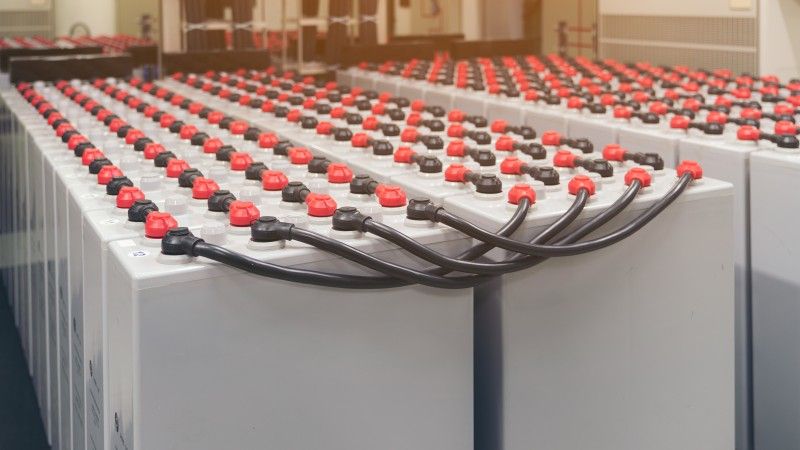
We most often think of the energy sector in the context of massive investments, such as the announced funds that the European Union has decided to allocate for the construction of nuclear power plants in Poland. Meanwhile, we are overlooking something much more obvious, something that has always been present and has never really posed a problem in terms of availability: batteries.
This is inconspicuous yet absolutely essential source of energy in everyday life. Without batteries and accumulators, a car won’t start, a cell phone won’t work, and no modern device today can function. Without photovoltaic farms and energy-storage batteries, there may soon be no stable electricity supply. This year, for the first time in history, more than half of newly installed electricity generation capacity comes from solar energy, and its purpose and future are inextricably linked to the development of battery technologies.
Batteries and the Military
Batteries are crucial in all domains of military operations today. On land, they power vehicles, various portable devices, microgrids, and energy weapons; at sea, they power ships, torpedoes, and autonomous underwater vehicles. In the air, they are found in missiles, drones, and fighter jets. In space, in conjunction with solar panels, they enable the operation of satellites responsible for reconnaissance, positioning, and communications. Even in cyberspace, they play a crucial role, providing emergency power to COMSEC systems, data centers, and supercomputers.
However, there is no single universal battery for all applications. They differ in chemical composition and parameters such as energy and power density, durability, and safety. Batteries used in missiles differ significantly from those used in fighter jets, and heavy energy storage systems for microgrids are not suitable for lightweight portable devices. Furthermore, military batteries must operate reliably under conditions of extreme temperatures, shock, and vibration, while maintaining consistent performance.

Chinese dominance - A dangerous dependence
In 2024-2025, the picture for the European battery and accumulator market remains clear. Interesting information on this topic has been presented in a number of publications, including L. Trakimavičius, „Wanted: More Batteries for Defence,” RUSI, October 2025; „China’s Lithium-Ion Battery Exports Surge 47% to 78 GWh,” Battery Tech Network, November 2025; and G. Maguire, „BESS Boom - China’s Battery Exports Charge to New Highs,” Reuters, November 2025. The European Union is highly dependent on supplies from China. Eurostat data and their updates used in 2024 analyses show that approximately 85-87% of all batteries and accumulators imported into the EU originate from China.
This means that the vast majority of batteries used in European electric vehicles, renewable energy installations, and industrial systems rely on Chinese supply chains. This dependence is structural, not temporary. In 2024–2025, China will maintain a dominant position not only in finished battery exports to Europe but also in global cell production, with its share estimated at over 80%, while Europe accounts for only a few percent of global production. This means that even though some final assembly takes place in the EU, key components and technologies still come from Asia. In practice, Europe imports not only the product but also the risks associated with geopolitical tensions, trade policies, and the possibility of sudden supply disruptions.
Available data indicates Europe’s strong dependence on China. As a result, the energy transition, electromobility, and the development of energy storage facilities in the EU are dependent on supplies from a single geographical location, increasing the risk of supply chain disruptions and threats to transportation, the energy sector, and the resilience of critical infrastructure.

Strategic risk for Poland
A suspension of battery exports by China would have similar consequences for Poland as for the rest of Europe, but in several areas, Poland could be even more vulnerable. This stems from the nature of the Polish economy, the structure of the energy sector, the role of logistics, and its proximity to Ukraine. What would such a crisis look like from a Polish perspective?
The key issue for Poland would be energy. The system is already unstable and overloaded, and the development of renewable energy sources, especially photovoltaics, depends on energy storage facilities. A lack of battery supplies would halt these investments, increasing the risk of failure and the need to import energy and power reserves from abroad.
The second area would be transport and logistics. Poland is a leader in European transport. Hundreds of thousands of electric devices, from forklifts to autonomous systems, are used in ports, container terminals, logistics centres, and warehouses. A battery shortage would limit fleet modernization and infrastructure maintenance, reduce efficiency, increase costs, and slow down supply chains, impacting exports, trade, and GDP.
The entire economy would also be affected by disruptions in industrial production. Industries such as household appliances, electronics, and automotive rely on batteries, whose shortage or rising prices would limit production, exports, and investment, and in the long term, employment, especially in major industrial centers.
On a social level, the battery crisis would mean rising living costs, more expensive electronics, medical equipment, and transportation. Problems with device servicing would affect hospitals and public transport, compromising the quality of public services.
Geographical consequences would also arise. Dependence on supplies from outside China would increase, while competition with other EU countries for limited resources would rise. This would risk tensions within the EU, and Poland, as a highly industrialized country dependent on imported components, would be among the hardest hit.
However, Poland is particularly vulnerable militarily. The modernization of the Polish military relies on technologies that largely require advanced batteries, from reconnaissance and strike drones to communication systems, sensors, support vehicles, and optoelectronics. Poland, as a country bordering Ukraine and one of the most important support hubs for the Ukrainian war effort, would feel additional pressure. A battery shortage would hamper both its own defence investments and the supply of equipment to Kyiv. At some point, Poland could be forced to ration some equipment, delay purchases, or hastily seek alternative suppliers, which would increase costs and extend delivery times.
In short, a suspension of China’s battery exports to Poland would simultaneously impact the energy sector, logistics, industry, the daily lives of citizens, and military security. The effects would be spread over time, but their scale, from delayed energy transition, to export disruptions, to defense problems, would make it a crisis felt in almost every sphere of the country’s functioning. A suspension of China’s battery exports would have a multifaceted and long-lasting destabilizing effect, affecting both the national infrastructure and the daily lives of our citizens. In a sense, it would be a silent crisis, but with enormous consequences.
A front without drones?
How would a shortage of Chinese batteries impact Ukraine? The consequences of an export suspension would be much more severe here than for EU countries. A battery shortage would disrupt hospitals, where many medical devices require electricity to operate under unstable power conditions, command posts, shelters, emergency centres, and critical infrastructure. Consequently, any Russian attack on thermal power plants or transformer stations would have a more severe impact on the civilian population. The Ukrainian economy would also face serious difficulties. This could also lead to a situation in which Ukraine competes with EU countries for the same limited resources, forcing allies to make difficult choices. In the broader perspective, a battery shortage would weaken Ukraine’s resilience, both military and civilian.
The ability to maintain critical infrastructure, protect the population, maintain state continuity in wartime, and conduct combat operations would be diminished. Defence would be the most affected sector. The Ukrainian military relies heavily on drones, both for reconnaissance and attack. The war in Ukraine is already being called the world’s first „drone war.” It could also aspire to be the world’s first artificial intelligence war, but also a battery war. Batteries for various military devices are one of the main consumables; they „wear out” quickly (they simply melt into the attacked targets) or require frequent replacement, and their quality directly affects the range, flight time and mission effectiveness. Most of these batteries come directly from China or from components of Chinese origin. A suspension of deliveries would mean an immediate reduction in the number of active systems on the frontline. Ukraine would be forced to curtail drone operations, which are currently one of its key tools for building an asymmetric advantage over Russia. The ability to conduct reconnaissance, precision strikes, and destroy targets deep within Russian lines would be diminished. As a result, Russia would gain greater operational freedom.
Problems would also arise in other defence segments, such as tactical communications, optical equipment, artillery systems, mine-laying devices, engineering robots, and surveillance systems. All of these rely on high-energy-density batteries. A supply shortage would lead to failures, operational limitations, and a decrease in operational efficiency. In some sections of the front, this could even lead to a loss of situational awareness, making units more vulnerable to Russian attacks.
How to build a battery shield?
The battery problem may seem trivial at first glance, but its impact on defence could be enormous. Suspending the export of batteries and accumulators by China would be a blow not only to the European economy (including Poland), but also to the defence capabilities of the entire continent. They are a silent yet crucial component of modern warfare - from batteries in Ukrainian drones, through NATO communications systems, to the energy base of the defence industry. A single political decision by Beijing could cause Europe, dependent on Chinese supplies, to wake up to a world where the front lines will lack… energy.
Recommendations for Europe should focus on mitigating the risks arising from excessive dependence on a single source of battery supplies. Therefore, the EU should systematically shift its focus from imports to developing its own capabilities throughout the entire value chain, from raw material processing to the production and scaling of battery technologies. Data from recent years show that batteries have become a key element of strategic security. Without this change, Europe will remain vulnerable to disruptions and dependent on the decisions of external suppliers. The European approach to batteries should incorporate more explicit strategic planning elements, similar to those used for energy resources and fuels.
The EU should diversify its supply of critical raw materials, reducing dependence on individual countries and unstable regions. This requires investing in extraction abroad, developing its own capabilities where possible, and relocating processing to Europe to mitigate the geopolitical risks associated with supply disruptions. Europe should support the development and commercialization of its own battery technologies, which would reduce risk and shorten supply chains. This may be a more expensive solution, but it is certainly safer. Well, if anyone thinks defence is cheap, try ignorance. Better safe than sorry!
Batteries and energy storage should be treated as an element of strategic security. We should create reserves of key components and incorporate battery technologies into defence planning, including NATO and the EU, increasing infrastructure resilience, troop mobility, and strategic autonomy in the face of crises and geopolitical threats.
It may seem odd, but in modern warfare, both an artillery battery and an AA battery can determine the outcome of a battle. Without the latter, the former often doesn’t even know where to fire. It turns out that a simple battery bought in a store and an artillery battery often play in the same league. One powers sensors and drones, the other attacks whatever the previous one detects.
Lt. Gen. (Ret.) Andrzej Fałkowski, Ph.D., among others former Deputy Chief of the General Staff of the Polish Armed Forces (DChoD) and Director of the Logistics and Resources Division of the NATO International Military Staff (IMS) in Brussels.


