












- WIADOMOŚCI
East Front News #102: Ankara summit – breakthrough or not?


East Front News is a weekly newsletter summarizing the past week’s most important events concerning security and the situation in the Central and Eastern Europe region. It includes original opinions and comments, along with key news items significant from a Polish perspective. If you would like to receive this newsletter, please sign up by clicking
The Ankara summit was not a breakthrough, but NATO preserved unity
The NATO summit in Ankara produced no major breakthrough, but it preserved allied unity despite disagreements over Ukraine, defence spending, Greenland and relations with Russia. The meeting also strengthened international industrial cooperation and expanded NATO’s engagement with global partners.
Türkiye emerged as one of the summit’s main beneficiaries, while the United States remained central to allied calculations. Europe, however, again failed to produce a political leader capable of setting the agenda or engaging decisively with Washington and Ankara.
Author: Aleksander Olech

China and Russia deepen naval ties in Joint Sea-2026
China and Russia have launched the annual Joint Sea-2026 exercises in the Yellow Sea. The drills involve air defence, aerial and naval drones, and a joint patrol in the Pacific Ocean.
The exercises come amid growing Western concern over closer Russian-Chinese military cooperation and follow a Chinese strategic ballistic missile test conducted from a nuclear-powered submarine.
Author: Patryk Jagnieża

Berlin turns former soldiers into a force it can actually use
Germany’s government has approved legislation introducing compulsory reserve training and reducing the ability of reservists and employers to block call-ups. Berlin aims to expand its reserve force to at least 200,000 personnel by 2033.
Reservists could be required to train for between three and twelve weeks annually and serve in other NATO and EU countries. The reform is intended to transform Germany’s large nominal reserve into a dependable force for national and allied defence.
Author: Jakub Bielamowicz

Canada advances plans for a new defence financing bank
Canada is promoting the Defence, Security and Resilience Bank, a proposed multilateral institution designed to mobilise private capital for defence and security investments. It would provide long-term financing to governments, defence companies and smaller suppliers.
Ottawa also hopes to host the bank’s headquarters, although some allies question whether another institution is necessary alongside existing mechanisms such as the EU’s SAFE programme.
Author: Natalia Iwaszko-Walsh

NATO expands Baltic Air Policing into a defence mission
NATO has agreed to transform Baltic Air Policing into a broader air defence mission. The change will give allied commanders and pilots greater authority to respond rapidly to objects entering NATO airspace.
The mission has protected Lithuania, Latvia and Estonia since 2004, with allied aircraft operating primarily from bases in Lithuania and Estonia. Russian military aircraft flying without transponders or proper communication remain a key concern.
Author: Michał Górski

Will Hamas dissolve its government in the Gaza Strip?
Hamas reportedly intends to dissolve its civilian government in the Gaza Strip and transfer administrative authority to a committee of Palestinian technocrats. The body would manage Gaza during the post-war transition envisaged in the United States« peace plan.
The proposed move would not mean Hamas’s dissolution or disarmament. Negotiations remain stalled, with both Hamas and Israeli Prime Minister Benjamin Netanyahu appearing to wait for potential political changes in Israel.
Author: Patryk Jagnieża

UK to lead $50 billion NATO long-range strike programme
The United Kingdom will lead a European initiative to develop long-range precision strike capabilities. European NATO members are expected to invest up to $50 billion over ten years in weapons capable of striking targets between 300 and 2,000 kilometres away.
The programme will complement British-led cooperation with Germany, France, Italy, the United States and Australia on cruise, ballistic, stealth and hypersonic weapons. It is expected to become a central element of NATO’s defence agenda in 2027.
Author: Michał Górski
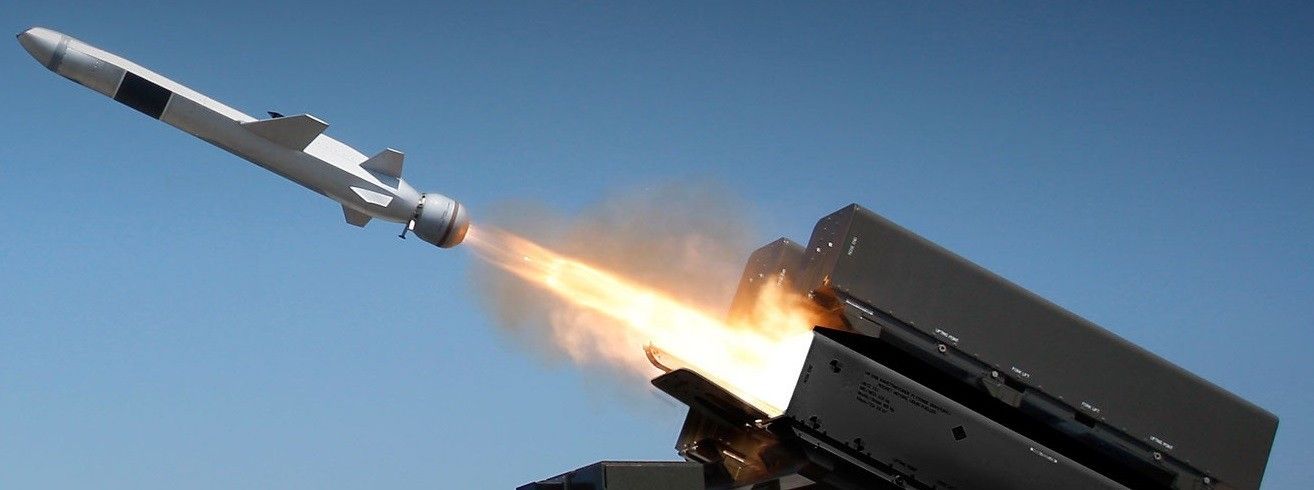
NATO summit in Ankara: Defence deals worth $50 billion
Allied countries announced defence agreements and investment packages worth more than $50 billion during the NATO Defence Industrial Forum in Ankara. The initiatives cover aircraft, drones, missile production, air defence, space technologies, precision-strike systems and critical raw materials.
The projects demonstrate NATO’s effort to build an integrated „Made in NATO” industrial ecosystem, increase European production capacity and reduce dependence on vulnerable supply chains. Particular emphasis was placed on counter-drone capabilities and multinational procurement.
Author: Natalia Adrianna Potera

Deterrence by presence in the High North
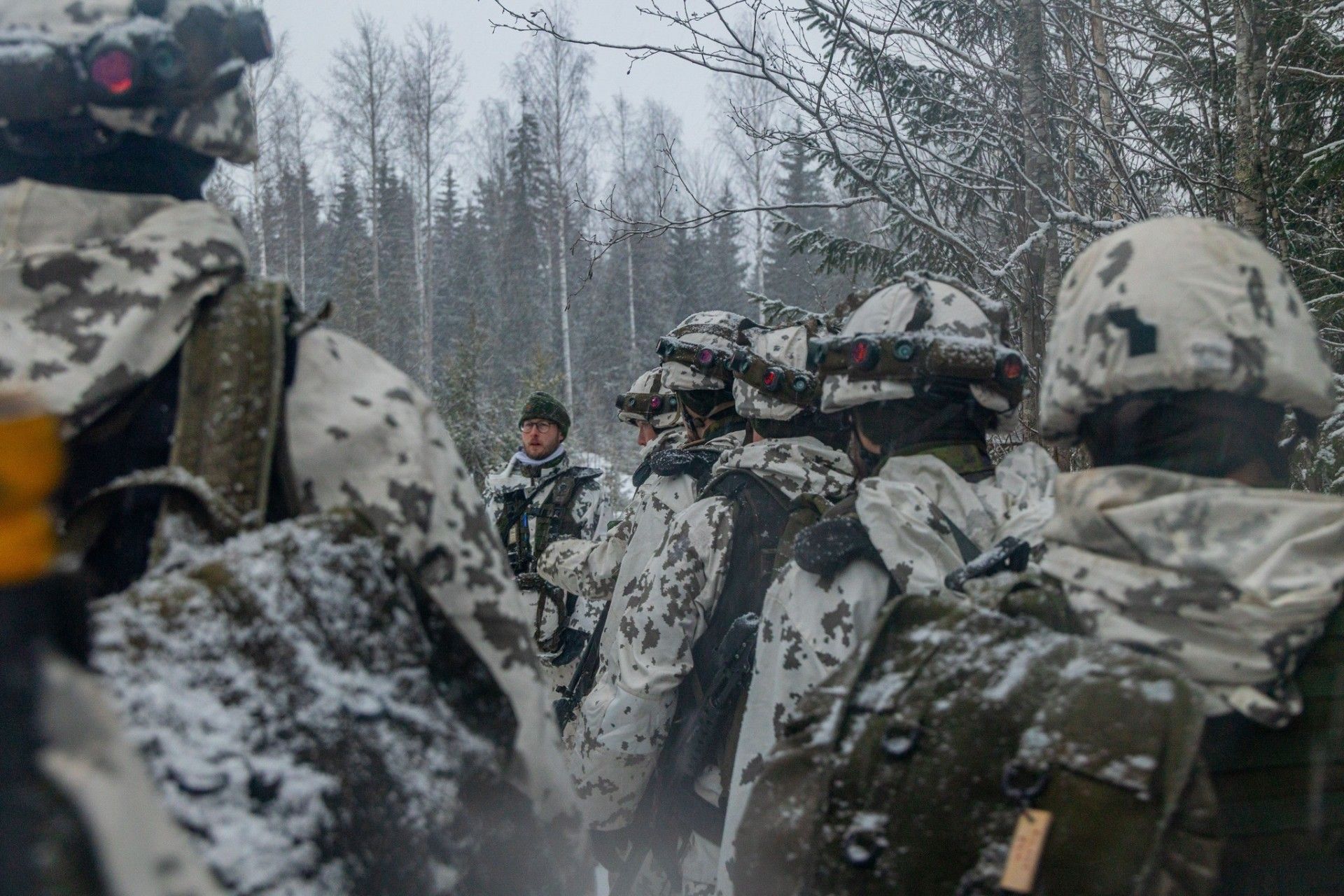
NATO has activated Forward Land Forces Finland, its ninth multinational battlegroup and the first established in the High North. Led by Sweden, the force strengthens NATO’s ability to defend Finland’s long border with Russia and reinforce allied troops in Arctic conditions.
Finland and Sweden are becoming central pillars of NATO’s northern defence posture by providing geography, Arctic expertise and established territorial defence capabilities. The Alliance must nevertheless treat the Arctic and Baltic Sea as interconnected parts of the same north-eastern flank.
Author: Aleksander Olech
The driving force of innovation in Military Police activities
The NATO Military Police Centre of Excellence in Bydgoszcz supports the development of allied Military Police capabilities through doctrine, training, lessons learned and experimentation. Its multinational team helps forces operating under different legal systems become more interoperable.
The Centre is adapting Military Policing to hybrid threats, emerging technologies and collective-defence requirements. It emphasises that Military Police capabilities should be incorporated into operational planning from the outset rather than treated as a secondary supporting function.
Author: Jacek Marcin Raubo


