












- WIADOMOŚCI
East Front News #97: NATO launches its largest Baltic military exercise and Armenia's tough choice


East Front News is a weekly newsletter summarizing the past week’s most important events concerning security and the situation in the Central and Eastern Europe region. It includes original opinions and comments, along with key news items significant from a Polish perspective. If you would like to receive this newsletter, please sign up by clicking
Will the EU establish a European security and defence council? the idea returns
The idea of creating a European Security and Defence Council has returned to the EU debate. Defence Commissioner Andrius Kubilius argues that Europe needs a forum to coordinate key security decisions, especially as the Russian threat grows and the US military presence in Europe becomes less certain.
The proposed council could involve not only EU member states, but also countries such as the United Kingdom, Ukraine and Norway. However, its powers, tasks and relationship with NATO remain unclear.
Author: Michał Górski

NATO launches its largest Baltic military exercise
BALTOPS 2026 began on 4 June in the Baltic Sea and will run until 19 June. The exercise involves 15 NATO countries and is commanded by the US Sixth Fleet together with STRIKFORNATO, underlining the Baltic region’s importance for allied defence.
Poland plays a particularly visible role this year, as the exercise starts in Gdynia. The manoeuvres focus on sea-lane protection, air defence, amphibious operations, mine countermeasures and cooperation with the Nordic-Baltic region.
Author: Karolina Kisiel

US troops in Poland
The article describes the current deployment of US forces in Poland and the history of Polish-American military cooperation. Around 10,000 American soldiers are stationed in Poland on average each year, although most of them rotate rather than remain permanently.
Key locations include Łask, Poznań, Żagań, Drawsko Pomorskie, Powidz, Orzysz-Bemowo Piskie and Redzikowo. Polish military leaders argue that Poland should now build the infrastructure needed for a more permanent US presence.
Author: Michał Górski
See also 
We cannot repeat the mistakes of the second Polish republic
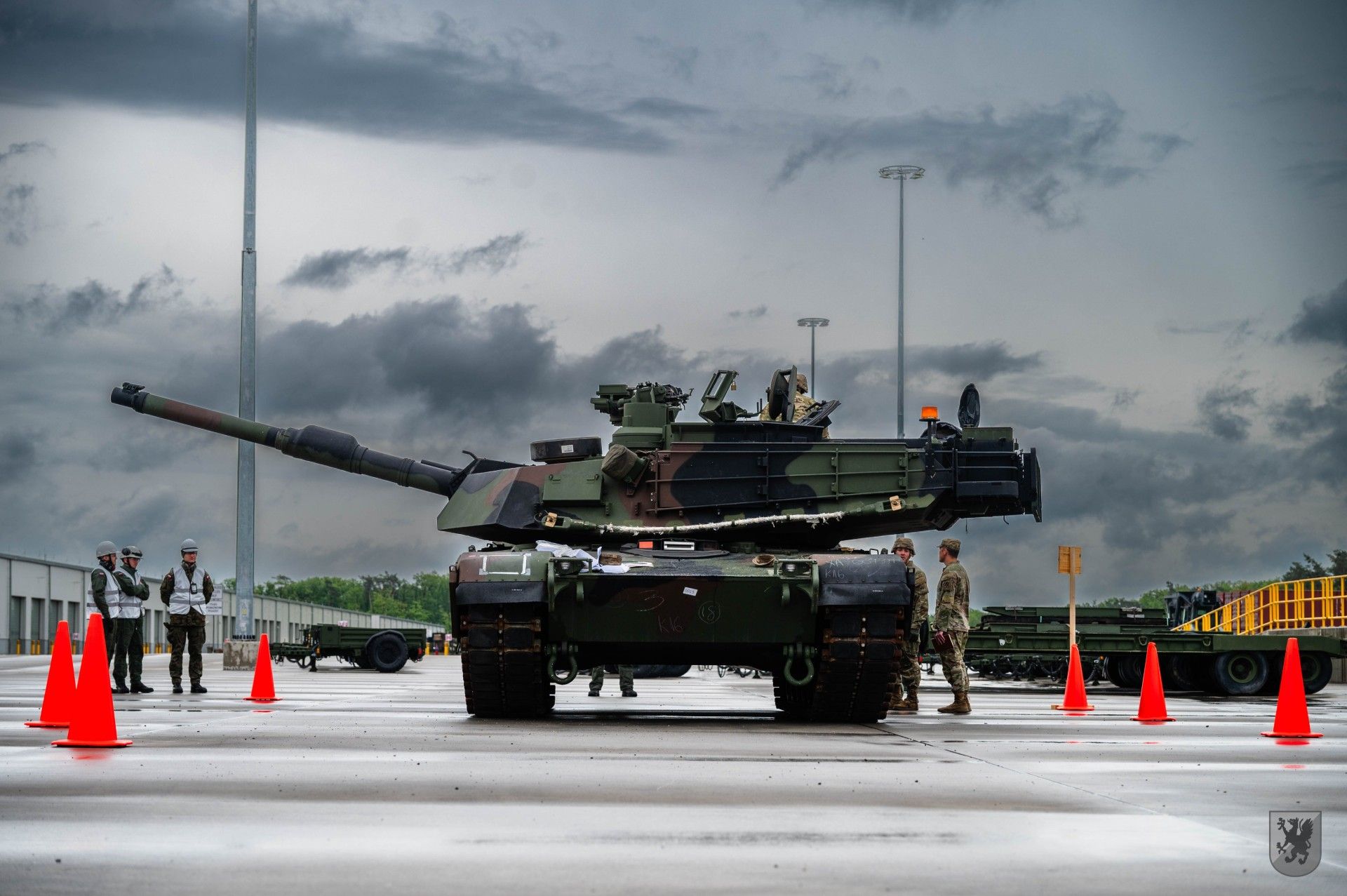
Major General Krzysztof Zielski warns that Poland must be ready for the possibility of Russian aggression against a NATO member state as early as 2030. He stresses that military modernisation cannot focus only on new equipment, but must also include infrastructure, logistics, command reform and long-term support.
The interview discusses Poland’s defence spending, the Technical Modernisation Plan, the SAFE mechanism, cooperation with industry and the life-cycle costs of weapons systems. Zielski argues that Poland must avoid the mistakes of the interwar period and prepare its armed forces in time.
Author: Jędrzej Graf

Paris burns after PSG
The article argues that the riots in Paris after Paris Saint-Germain’s Champions League victory were not only the result of football emotions. Burning cars, clashes with police and hundreds of arrests are presented as symptoms of a deeper urban security crisis.
According to the authors, mass events in Paris can create anonymity that enables hooligans, criminal groups and street gangs to act. The text links this violence to local rivalries, drug markets, weak state control and the normalisation of disorder in public spaces.
Author: Adam Jawor, Aleksander Olech
See also

We know who is eager to participate in airport counter-UAS defence in Poland
Poland’s Armament Agency has revealed the companies interested in preliminary market consultations for a counter-drone system designed to protect military air bases and critical infrastructure. The planned system would detect, identify, track and neutralise Class I unmanned aerial vehicles.
The consultations are expected to continue until at least the end of June 2026. Many Polish and international companies have applied, including WB Electronics, PIT-RADWAR, Saab, Thales, Hensoldt, BAE Systems, L3Harris and Anduril.
Author: Wojciech Kozioł
See also

EAEU or EU? Armenia's strategic crossroads
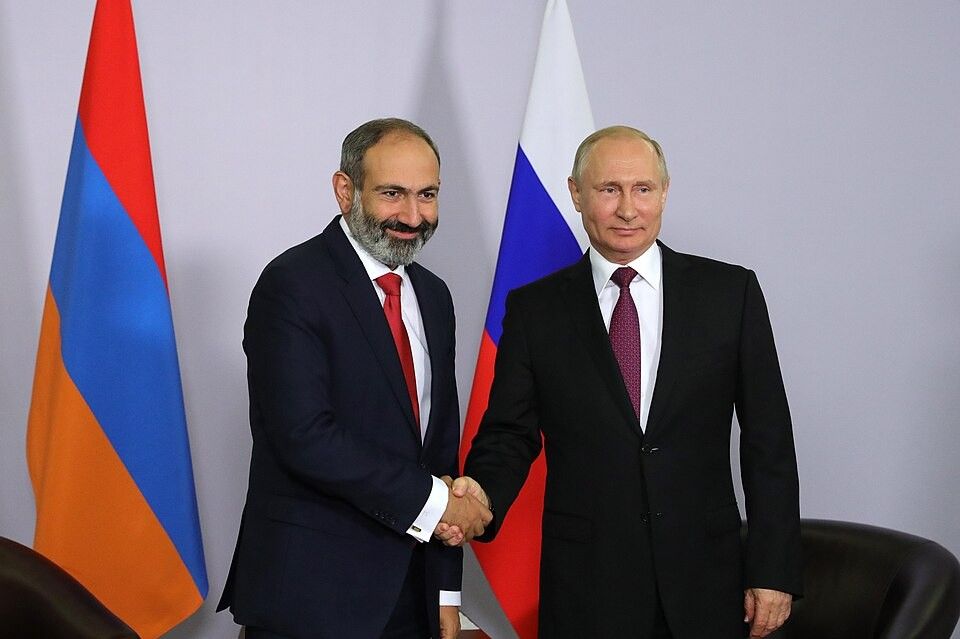
Armenia faces a strategic choice between maintaining close ties with Russia and continuing its pro-Western turn. Prime Minister Nikol Pashinyan has strengthened relations with the EU and the United States, while Russia has warned Armenia against moving away from the Eurasian Economic Union.
The upcoming parliamentary elections may decide whether Armenia continues this course. Pashinyan’s party leads in the polls, but pro-Russian opposition groups remain strong and could halt the country’s Western pivot.
Author: Patryk Jagnieża
Iceland without an army
Although Iceland has no army, navy or air force, it plays an important role in NATO’s Arctic strategy. Its location in the North Atlantic, together with the Keflavik air base, radar systems and deep-water ports, makes it essential for allied operations.
NATO’s Arctic Sentry strategy increases the Alliance’s focus on the region in response to Russian activity in the Arctic and North Atlantic. Iceland provides infrastructure, airspace and early warning capabilities, even though its own security depends on allied support.
Author: Mateusz Gibała

France blocks Israel at Eurosatory
France has limited the presence of Israeli defence companies at Eurosatory, allowing them to show only anti-ballistic and air-defence systems. Offensive weapons such as rockets, loitering munitions and surface-to-surface missiles are excluded.
The decision has deepened tensions between France and Israel. The article argues that the dispute is both political and industrial, as France seeks to signal opposition to Israeli actions while also competing with Israeli firms in key defence markets.
Author: Aleksander Olech
See also
US and India to jointly produce Javelins?
US Secretary of Defense Pete Hegseth presented Washington’s Indo-Pacific vision during the Shangri-La Dialogue in Singapore. He said the United States wants partners rather than protectorates, with allies taking greater responsibility for their own defence.
The speech focused on burden sharing, deterrence, China and closer cooperation with Asian partners. Hegseth also suggested that India could support US naval logistics and take part in co-producing advanced systems, including Javelin anti-tank missiles.
Author: Michał Górski

Kyiv's pivot: from Minsk to the democratic opposition
Sviatlana Tsikhanouskaya, the Belarusian opposition leader in exile, made her first official visit to Kyiv and met President Volodymyr Zelenskyy. The visit marked a clear shift in Ukraine’s approach to Belarus, moving closer to the democratic opposition rather than maintaining limited contacts with Minsk.
The opening of the Mission of Democratic Belarus in Ukraine gives the opposition a permanent presence in Kyiv. Although Tsikhanouskaya’s movement has limited influence inside Belarus, the visit strengthened its legitimacy and improved Ukraine’s ties with Belarusian democratic forces.
Author: Patryk Jagnieża


