












- WIADOMOŚCI
- ANALIZA
APEC 2026: The logic of Yalta without Yalta

 Add as preferred on Google
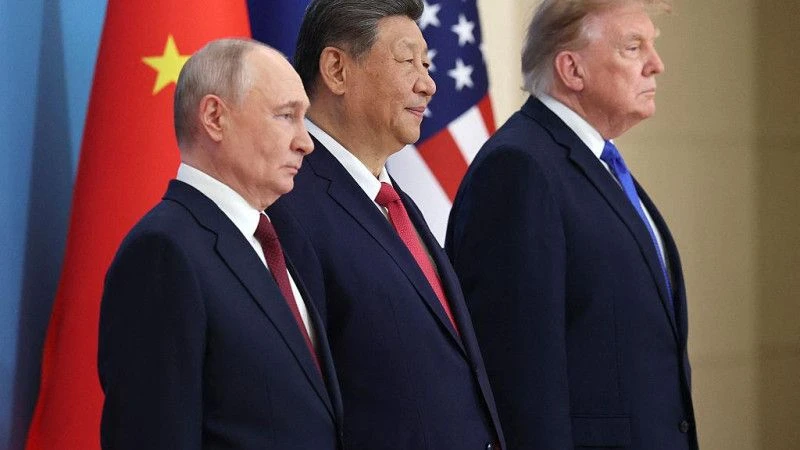
The dust has already settled after the 2026 APEC summit in Shenzhen. Its most high-profile event, the first-ever trilateral meeting between Donald Trump, Xi Jinping, and Vladimir Putin, quickly drew comparisons to the Yalta Conference.
These comparisons are misplaced. As Jakub Jakóbowski of the Centre for Eastern Studies (OSW) in Warsaw noted, none of these countries currently enjoys the advantage the Allies had in February 1945. Two of them are locked in wars they cannot end on their own: Russia in Ukraine, the United States in Iran. The scale of the two events is also different: the Yalta Conference lasted eight days, the meeting in Shenzhen less than an hour and a half. The Shenzhen Declaration is not binding; at most, it announces talks, for example, on reducing nuclear risks.
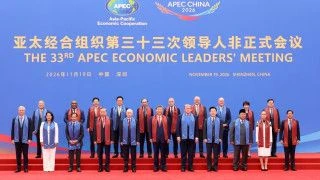
It should therefore come as no surprise that many commentators, disappointed by the lack of specifics, dismissed the meeting as pure spectacle for the cameras.
I would not attribute much strategic significance to it either. Still, what was said in Shenzhen deserves a closer look, especially the one issue on which the three powers turned out to agree.
Four points, one exception
What exactly was agreed upon in Shenzhen? The declaration consists of just four points. Three of them are diplomatic platitudes: UN reform, more refined petroleum products on the market, and a promise of dialogue on reducing nuclear risks, with no date, no numbers, and not a word about cutting arsenals. The declaration also omits the wars in Ukraine and Iran, even though Donald Trump insisted that both had been discussed.
One point, however, is more than a stock phrase. The three leaders “recognized that the principle of state consent and respect for immunities of State officials are of paramount importance” and “concurred that the International Criminal Court and other similar bodies must not abuse their jurisdiction.” The principle of state consent here means that a court should not try nationals of a state that has not consented to it. The call to respect immunities, in turn, cuts against the principle that official capacity, including that of a head of state, offers no shield from prosecution (Article 27 of the Rome Statute).
The hostility of these three countries towards the Court is nothing new. What is striking, however, is the timing. Vladimir Putin has been the subject of an ICC arrest warrant since 2023 for the alleged unlawful deportation of Ukrainian children, while the Trump administration has sanctioned the judges who issued an arrest warrant for Benjamin Netanyahu over alleged war crimes and crimes against humanity in Gaza. In both cases, the Court acts without the consent of Russia or Israel, because the alleged crimes took place on the territory of Ukraine, which accepted the Court’s jurisdiction and has been a State Party since 2025, and of Palestine, which is a State Party.
At the opening of the meeting, Xi Jinping spoke of shaping relations among the great powers around “peaceful coexistence.” This concept is partly of Chinese origin: the five principles of peaceful coexistence were formulated by China and India in 1954, and a year later, the Bandung Conference incorporated them into its ten principles. They were intended to protect weaker states from the dictates of the powerful. In Shenzhen, they took on a new meaning and became a rule for coexistence among the great powers themselves. World peace, then, was discussed in generalities, but on one point there was complete agreement: great powers should not be accountable to anyone.
China: A PR win and two narratives
For Beijing, Shenzhen was primarily a PR success. China had hosted APEC twice before, in Shanghai in 2001 and in Beijing in 2014. However, never before has China hosted the leaders of the United States and Russia at the same table. This is a far cry from Deng Xiaoping’s maxim: “hide your strength and bide your time.” Chinese Foreign Minister Wang Yi spoke of a “peace summit,” and Foreign Ministry spokeswoman Mao Ning reminded reporters before the meeting that China, Russia, and the United States were founding members of the UN and permanent members of the Security Council who had won World War II together. This is selective history. The country that fought Japan and co-founded the UN was the Republic of China; Beijing took over its UN seat only in 1971. And the Red Army included not only Russians but also Ukrainians, Belarusians, and other peoples who now have states of their own.
Beijing, just as vehemently as European commentators, rejected comparisons to Yalta, but for entirely different reasons. Europeans argued that none of today’s great powers is strong enough to divide the world. Chinese commentators pointed out that the Chinese delegation was not present in Yalta at all, and that Roosevelt, Churchill, and Stalin had agreed, without China’s participation, to restore Soviet privileges in strategic ports and railways in northeastern China. For Beijing, Yalta symbolizes a world in which decisions about China were made without China.
See also 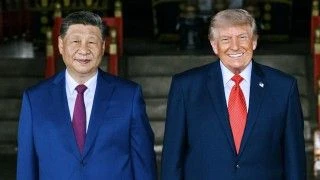
That is why the official narrative so strongly emphasizes that China remains a developing country and part of the Global South, a tradition dating back to the Bandung Conference and Mao’s Three Worlds Theory. Wang Yi, who said the meeting had created “a new paradigm for coordination and interaction among major countries,” insisted in the same briefing that “all countries, big or small, are equal.” Chinese diplomacy thus balances two narratives, drawing on whichever serves it best. On the one hand, there is professed solidarity with the Global South and assurances that great powers must not decide for smaller states. On the other, there is China’s signature on a declaration meant to shield great powers from international justice.
The roots of the ICC: A shaky compromise
To understand why this point matters, it is worth recalling the origins of the ICC. The ad hoc tribunals, established by the Security Council after the crimes in the former Yugoslavia and the genocide in Rwanda, showed that justice improvised case by case is costly, selective, and dependent on the political will of major powers. A permanent tribunal was intended to ensure that the prosecution of such crimes in the future would not depend on whether the five permanent members of the Council reached an agreement.
The idea was pushed by a group of several dozen countries known as the Like-Minded Group. Initially, this group was largely Western, led by Canada, but over time, Latin American and African countries joined in. It was supported by a coalition of non-governmental organizations, founded in New York in 1995 as the Coalition for an International Criminal Court (today’s Coalition for the International Criminal Court, CICC). These states found it easier to insist on an independent court because, unlike major powers, they rarely conducted military operations far from their borders.
On the other side were the United States and China, which wanted a court triggered by the Security Council and thus effectively subject to the veto. A split among the great powers tipped the scales. In 1997, after Tony Blair came to power, London joined the Like-Minded Group. For the first time, a permanent member of the Council backed a court independent of the Council’s control. France supported the Statute only after winning a seven-year opt-out from the tribunal’s jurisdiction over war crimes committed by its citizens (Article 124 of the Rome Statute).
See also 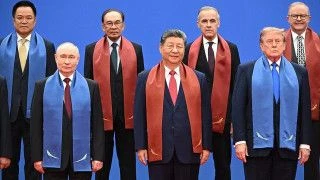
In Rome in 1998, a compromise was reached. The great powers got safeguards: the Council can refer situations to the tribunal (Article 13(b) of the Statute), and thanks to Singapore’s proposal, it can also defer investigations or prosecutions for twelve months, renewable (Article 16). The compromise reversed the veto logic: a single power cannot halt the tribunal, and halting a case requires a resolution, which any permanent member can veto. The middle powers secured a prosecutor who can open investigations proprio motu, subject to authorization by the Pre-Trial Chamber (Article 15). The United States was primarily concerned that the Court could prosecute nationals of non-party states if the crime occurred on the territory of a party state (Article 12). Washington and Beijing voted against the Statute. The 1998 objection returns today in the Shenzhen Declaration as the “principle of state consent.”
The Court has faced criticism from the start. Over the years, the loudest came from Africa, paradoxically from states that had been early supporters, ratified the Statute en masse and referred situations on their own territory to the Court. However, as subsequent investigations focused almost exclusively on the African continent, and proceedings targeted the sitting leaders of Sudan and Kenya, the accusation of neocolonialism became difficult to ignore. The African Union also demanded immunity for sitting heads of state, and wrote such immunity into the 2014 Malabo Protocol for a future African court. This criticism, however, should be distinguished from that heard today from the great powers. African states accused the Court of trying only the weak. Great powers accuse it of wanting to try the strong as well. The first criticism demands that the law apply equally to everyone; the second, that it not apply to those who can afford to ignore it. Today, the two strands are converging. When Chad announced its withdrawal from the ICC in July, it cited the Court’s bias against Africa, but the decision came days after a phone call in which a US official asked N’Djamena to review its membership.
Not dead yet, but the trend is not encouraging
Still, it would be premature to declare the Court dead. The trial of former Philippine President Rodrigo Duterte, accused of crimes against humanity, begins in The Hague on November 30. Hungary, which announced its withdrawal from the ICC under Viktor Orbán, reversed the decision after a change of government, just before the withdrawal was due to take effect. And for the first time in the Court’s history, the States Parties removed its Prosecutor, Karim Khan, for serious misconduct and a serious breach of duty, showing that they can hold the Court’s own officials to account. Yet six states have announced their withdrawal since September 2025: Burkina Faso, Mali, and Niger, then Venezuela and Chad in July of this year, and Nauru in September. The State Department openly encourages others to follow.
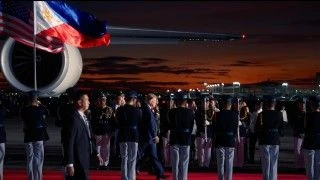
Nor is it news that the three powers that met in Shenzhen look askance at The Hague. China has never signed the Rome Statute. The United States withdrew its signature in 2002 and, in the same year, passed a law intended to protect American citizens from the tribunal’s jurisdiction. Russia withdrew its signature in 2016, shortly after the ICC prosecutor’s office declared the situation in Crimea an international armed conflict between Russia and Ukraine. Washington has cooperated with the Court when it suited it. The Joe Biden administration provided it with evidence of Russian crimes in Ukraine, and Biden himself called the arrest warrants for Benjamin Netanyahu, who is accused of war crimes in the Gaza Strip, “outrageous.” The first Trump administration sanctioned Prosecutor Fatou Bensouda in 2020; Biden lifted those sanctions. The second Trump administration has gone much further: instead of criticizing the tribunal, it decided to dismantle it.
And here is where the real problem begins. Since October, the ICC as a whole has been on the US sanctions list. The Treasury Department has issued a general license allowing for transactions essential to its operation, from employee salaries and insurance to headquarters rent, but this license is valid only until April 7, 2027. The license speaks of “the maintenance or wind down of operations.” States Parties have the money for contributions, but they may not be able to transfer them after April because banks linked to the US market would not risk sanctions. For Europe, which, along with Japan, finances a significant portion of the ICC budget and hosts it, it is a race against time. Democrats, who will take control of both houses of Congress in January, could increase the political cost of sanctions through hearings and oversight. However, as former ICC judge Christine Van den Wyngaert warned in EUobserver, Brussels should not assume that they will prove natural allies. In January 2025, 45 House Democrats voted for a Republican bill to sanction the Court, and those who later blocked it in the Senate were worried, among other things, about the consequences for American companies.
On paper, everything needed is still there. In February 2025, 79 States Parties signed a joint statement of support for the tribunal, from Germany and the United Kingdom to Brazil, Mexico, and South Africa. Europe has a tool that could mitigate the impact of US sanctions: the EU Blocking Statute (Regulation 2271/96). It prohibits European companies from complying with extraterritorial sanctions by third countries, but only those listed in the Annex, so the Commission would first have to expand it. Experience with the 2018 Iran sanctions also shows that companies with significant exposure to the US market tend to withdraw from transactions anyway. In early 2025, the Hague Group was established in the Global South.
What is missing is the willingness to pay for the Court’s defence. The foreign ministers of eight countries, including France, Germany, the United Kingdom, and Japan, declared that they “regret and strongly disagree” with the sanctions. Not only does such a gesture in itself cost little, but it also means little. On October 14, the European Commission said discussions were continuing, but the blocking statute remains unused.
The most telling example is Canada. The country that led the coalition of supporters of the court in Rome now professes its “unequivocal” support, yet will not publicly criticize the sanctions imposed on Canadian judge Kimberly Prost. The same Prime Minister, Mark Carney, spoke in Davos in January of “a brutal reality where geopolitics among the great powers is not subject to any constraints.” It would be hard to find a better description of the world the ICC was meant to guard against.
There is also the issue of credibility. Europe, which would have to lead the Court’s defence, itself hesitates over enforcing the warrant against Netanyahu. Without this credibility, it is difficult to convince the Global South that the court is not a tool of Western control. In 1998, the middle powers simply had the will, as supporting the court cost nothing. Today, they would still have enough money and votes to defend it. They lack the conviction that the cost is worth it, and the credibility to convince the rest of the world to do the same.

Agreement on one matter
On the same day that Duterte’s trial begins, the ICC’s States Parties gather in The Hague for their annual Assembly. On April 7, 2027, the US license that allows the tribunal to pay its staff will expire. This is not the end of the ICC yet. Shenzhen was not a new Yalta either: none of these powers is strong enough today to carve up the world at a single table.
But for the logic of Yalta to return, there is no need to divide the world. It is enough for those who cannot agree on anything else to agree that the rules should not apply to them, and whether someone is held accountable for crimes in Ukraine or Palestine should not be decided by Ukraine or Palestine. On this one issue, there was complete agreement in Shenzhen. And there is no sign of it fading anytime soon.
Author: Zofia Maria Żurek


