












- ANALIZA
- OPINIA
- KOMENTARZ
- WIADOMOŚCI
Sabotage and Diversion Demand Our Response [OPINION]

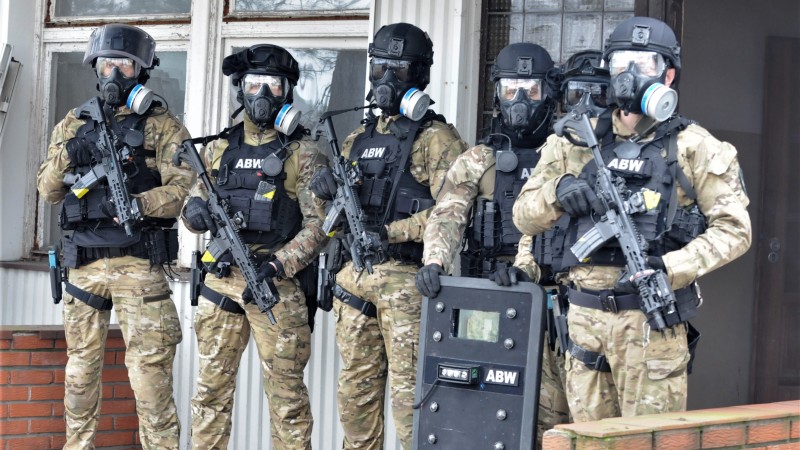
Further potential acts of diversion and sabotage in Poland and across Europe necessitate, on the one hand, a re-emphasis on the current state of our security and, on the other, the identification of measures to streamline a systemic response to existing threats. There can be no doubt that a specific state on the European continent actively targets various elements of our infrastructure and beyond: namely Russia, an actor possessing both the operational experience and the risk appetite for such covert operations.
Across various parts of Europe—and regrettably in Poland—a growing body of circumstantial evidence points to a surge in diversionary and sabotage incidents. We are witnessing attempted arson, alongside the potential use of other types of ordnance, including payloads integrated into unmanned systems, as observed in Germany. Crucially, the key factors here are the expanding scale, frequency, and dispersion of these threats. Furthermore, the Russians employ psychological influence campaigns designed to intimidate or, at a minimum, heighten psychological pressure on various state and non-state entities around Europe.

Examples of the former include explicit statements declaring facilities within the territories of nations assisting Ukraine to be legitimate targets, naming specific countries. Regarding non-state actors, this manifests in targeted attempts to intimidate various commercial entities and individual business leaders, particularly within the defense industry.
Kinetic Threats Are Real
Publicly disclosed evidence of these covert operations demonstrates that they have long breached the bounds of information-cognitive influence, escalating into direct kinetic actions. This directly impacts Poland, as illustrated by data presented in material regarding covert attacks on freight and logistics networks. Regrettably, while the potential adversary’s target selection and operational methods are predictable, Moscow currently enjoys significant latitude in choosing its attack vectors. This is enabled by the assumption that European nations operate strictly under peacetime frameworks. Moreover, many national security architectures were primarily calibrated to combat counter-terrorism threats and are currently undergoing a complex structural transition toward state and quasi-state threats. This transition must not, however, imply a simple replacement or reallocation of resources from counter-terrorism domains, as terrorist threats—including Islamist and other extremist variants—remain persistently active.

Consequently, Russia currently enjoys a substantial window of opportunity to execute covert operations rooted in the traditional Soviet doctrine of active measures (aktivnyye meropriyatiya). Favorable operational conditions include recruitment pools within post-Soviet diaspora communities—particularly Russian-speaking demographics—as well as existing pro-Russian currents that amplify broadly anti-NATO, anti-American, and anti-imperialist narratives (ironically ignoring that Russia itself represents the sole aggressively imperialist power operating in Europe today). Furthermore, Russia possesses extensive operational experience in adapting to diplomatic cutbacks.
This entails relying on illegal residencies (illegals—whose significance is frequently highlighted by Russian state propaganda), organized crime networks, and front companies. Historically, during similar periods of crisis, even martial arts schools that utilized Russian systems or were staffed by Russian personnel were evaluated as potential proxy networks.

Russia Holds a Spectrum of Capabilities—and So Do We
Another factor expanding Russian operational capabilities is the evolution of encrypted and unencrypted telecommunications technologies. This advancement streamlines recruitment processes and subsequent asset handling, not only for conventional intelligence gathering but also for covert operations, including sabotage and diversion. Changes in the cyber domain also provide intelligence officers with safer, more efficient methodologies for conducting target reconnaissance.

Finally, we must recognize that Russia does not merely rely on Soviet heritage; it has accumulated extensive modern lessons learned in sabotage and diversion under wartime conditions. Ukraine was, and continues to be, the primary testing ground for refining these tactics and techniques. Notably, even before the 2022 full-scale invasion, unmanned aerial systems equipped with incendiary payloads were deployed in Ukraine to destroy ammunition depots and critical defense logistics. Today, these tactics are compounded by rapid advances in full-scale conventional warfare—developments for which other European nations, and even the United States, remain partially unprepared.
The most effective countermeasure against these highly probable sub-threshold threats from Russia is the comprehensive reinforcement of our counterintelligence capabilities. Any strategic assessment must fundamentally begin and end with this imperative. Should hypotheses confirming Russian involvement in recent arson attacks against Polish industrial facilities be verified, it will come as no surprise. Poland’s defense industry, its commercial partners, critical infrastructure, and logistical hubs have been firmly in Russia’s crosshairs since 2022, primarily due to the military assistance routed through Western channels to Ukraine.
See also 

Poland plays a central role in this effort, both geographically and in the sheer volume of support it provides. Crucially, this strategic positioning will not diminish in the future. The Russian state ideology, anchored in revanchist neo-imperialism, will continue to compel its ruling elites toward retaliatory actions aimed at those who hindered Russia’s territorial ambitions.
This Is Not a Temporary Challenge
We are not facing a temporary, ad hoc phenomenon that will naturally dissipate, but rather a medium- to long-term trend. This trajectory aligns with European security dynamics observed from the initial Russian aggression against Ukraine in 2014 through to the 2022 full-scale invasion. However, we must anticipate that the scale of active measures approved by the Kremlin will be significantly larger and directly aligned with the intensity of Russia’s hostility toward its adversaries. For Poland, as well as for other European nations, these challenges will be ubiquitous across the continent, further accelerated by shifts in the transatlantic burden-sharing structure within NATO. As the United States increasingly expects European allies to assume primary responsibility for conventional defense to an unprecedented degree, European armed forces and defense investments will expand rapidly.

Russia views this military buildup as a direct threat to its strategic objectives, which have historically relied on perceived military weaknesses along NATO’s eastern flank and across Europe as a whole. Weakness previously allowed Moscow to leverage its core triad of influence: energy resources, conventional forces, and nuclear coercion. Consequently, as European defense investments grow and reliance on Russian energy declines, Russia’s traditional levers of pressure erode. In response, Moscow is increasingly incentivized to resort to asymmetric tools, including sabotage, diversion, state-sponsored terrorism, false-flag operations, and cyber-cognitive warfare.
Preparing for an Escalated Threat Environment
We must prepare to operate in an environment marked by intensified activity from Russian intelligence services (GRU/GU, SWR, and FSB) alongside their proxies, such as the Belarusian KGB. As previously analyzed in Infosecurity24, our national counter-response architecture must be structured across several key operational layers. The most immediate necessity is enhancing capabilities within the information-cognitive domain.
Recent crisis incidents consistently expose vulnerabilities in strategic communication (StratCom) and cognitive countermeasures. In Poland, public discourse surrounding these issues is frequently oversimplified and suffers from a lack of standardized terminology between civilian governance and the military-intelligence sector. A critical vulnerability remains the lack of proactive, offensive messaging targeting high-risk groups and minorities.

The second critical layer requires sustained investment in counterintelligence resources across four main pillars: legal frameworks, funding scale, technical capabilities, and human capital. Legislative frameworks governing responses to foreign intelligence activities must be continually updated to address both traditional espionage and emerging asymmetric methods. This is particularly urgent as state authorities deliberate on legal mechanisms to address the threshold between peace and war. Just as the Polish Armed Forces require clear legal frameworks to respond to airspace violations by hostile platforms, so too do counterintelligence agencies require modernized legal tools for their daily operations.
Building public understanding is vital. While there is strong public support for military expansion and the restoration of civil defense, strengthening counterintelligence often receives less emphasis due to political, historical, or emotional factors. Public perception is too often shaped by narratives highlighting intelligence failures, as security protocols naturally prevent agencies from publicizing operational successes. However, modern NATO practices offer tested frameworks for enhancing institutional credibility without compromising operational security or intelligence sources.
Funding Beyond Conventional Armaments
Addressing these security challenges fundamentally depends on sustainable funding models. The objective is not to flood the system with non-absorbable capital, but to establish a steady, long-term trajectory of institutional reinforcement, similar to current military and civil defense modernization efforts. Counterintelligence operations require substantial financial backing for personnel, advanced technical equipment, and infrastructure.

Modern counterintelligence—including SIGINT capabilities—is as capital-intensive as offensive intelligence gathering and must be scaled directly to the threat level. Given Poland’s permanent strategic exposure, its counterintelligence shield requires a multi-year investment strategy that accounts for the long-term operational horizons typical of Russian espionage and sabotage planning.
Finally, effective counter-sabotage strategies must prioritize institutional prevention and situational awareness. This requires specialized training within sensitive public and private sector entities, supported by clear communication channels and operational interoperability at both local and national levels. Building security awareness among high-risk groups and the broader public is essential. Drawing on established counter-terrorism frameworks, public education on Russian state threats must be systematically expanded across energy networks, critical infrastructure, essential services, and strategic industries, using modern communication platforms to ensure broad reach.


