


- WIADOMOŚCI
- ANALIZA
Poland and Czechia: Towards a strategic partnership
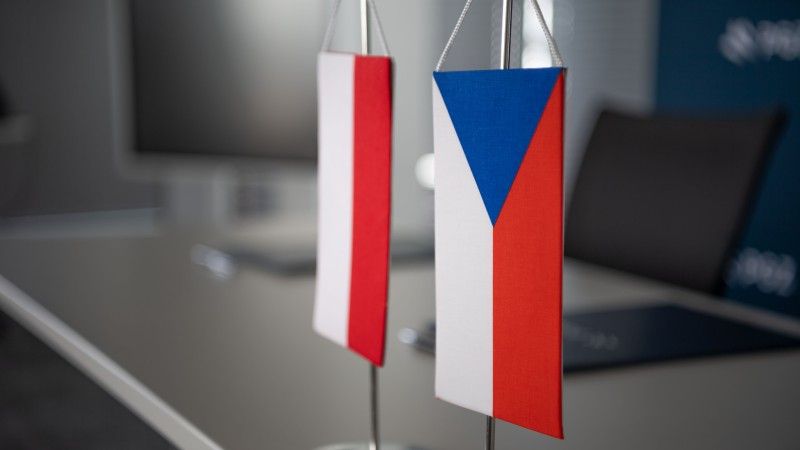
For many years, Polish–Czech relations were regarded as good, but not necessarily strategic. Geographical proximity, extensive contacts and membership of the same Euro-Atlantic institutions did not in themselves mean that Warsaw and Prague saw each other as partners of choice.
In recent years, this has begun to change. The pandemic, Russia’s aggression against Ukraine, the energy crisis and the difficulties facing Germany’s industrial model have shown that the relationship between these two neighbours matters more than had long been assumed. It is also becoming increasingly clear that this shift is driven not by similarities between the two countries, but by their complementary strengths and the growing convergence of their interests.

This shift is particularly evident on the Czech side. Poland has come to be seen not only as a large neighbour and an important market, but also as an interesting example of how to modernise infrastructure, maintain a well-developed industrial base and build resilience to external shocks. The slowdown in German industry has highlighted the risks arising from the Czech economy’s heavy dependence on German production chains. Against this backdrop, the growth of Polish–Czech trade, investment and industrial cooperation has also come to be seen as a means of diversification. The growing importance of Poland’s Baltic ports and improved transport links along the north–south axis make Poland’s logistics services more attractive to Czech businesses, providing an alternative to traditional routes through German and Adriatic ports. From Poland’s perspective, Czechia is in turn a partner with a strong industrial culture, a well-developed private sector, technological expertise and export experience, and often also a springboard for Polish companies to expand into markets further afield.
Security is an area in which the two countries have moved markedly closer. Today’s convergence of interests has not emerged in a historical vacuum. Alongside difficult episodes in bilateral relations, there is a tradition of cooperation and comradeship in arms, followed later by solidarity between opposition movements on both sides of the border. We share a commitment to independence and the freedom to shape our own destinies, as well as a history of resisting power politics and violations of state sovereignty.
Poland was quicker and more consistent in recognising Russia’s revisionist policies as the principal threat to regional security. In Czechia, a major catalyst was the revelation in April 2021 of Russian intelligence services’ involvement in the 2014 explosions at ammunition depots in Vrbětice. Prague’s response went beyond diplomacy, as illustrated by the exclusion of Rosatom from preparations to expand the Dukovany nuclear power plant. Poland’s efforts to strengthen NATO’s eastern flank also contribute to Czechia’s security, while Czechia provides Poland with an important logistical base for military mobility and the transit of Allied forces. Extending NATO’s fuel infrastructure towards Central Europe also remains a shared interest.

Defence industrial cooperation could become a particularly important area in which to build on this convergence. The two sectors differ in structure, but these very differences mean they can complement each other. Czechia’s defence industry is largely privately owned, strongly export-oriented and experienced in third-country markets. Poland has a larger market, high levels of spending on military modernisation, a substantial state-owned sector and growing production capacity.
The war in Ukraine has demonstrated the importance of Czechia’s defence industry and its ability to respond swiftly to partners’ needs, as illustrated by the success of the Czech ammunition initiative. Alongside the competition that naturally exists, there is considerable scope for joint projects, cross-border supply chains, ammunition production and joint entry into third-country markets. This cooperation would benefit from a more systematic approach through the development of a Polish–Czech defence industrial dialogue involving government authorities, the armed forces, state-owned and private companies, and financial institutions. Such a dialogue could help identify projects and make better use of European instruments supporting joint procurement and the expansion of production capacity.
A similar logic of complementarity is evident in other branches of industry. Poland and Czechia are among Europe’s leading centres for bus and trolleybus production, and cooperation between companies such as Solaris and Škoda Group shows that competition can go hand in hand with joint product development and shared supply chains. One example is the trolleybuses they have jointly developed, which operate in cities including Sofia, Budapest, Bratislava and Prague.
Energy is another area in which cooperation and the exchange of experience take tangible form. Polish investment in Czechia’s petrochemical sector ranks among Poland’s largest investments abroad, while the development of nuclear energy on both sides of the border creates opportunities for cooperation in equipment supply, engineering services, regulation and workforce training. Czechia has also developed a substantial biogas sector, which could offer Poland a useful example of how to develop a dispatchable source of renewable energy that does not depend on weather conditions. There is also scope for complementarity in new technologies and growth financing: the two countries have developed different capital market models, yet both face a shortage of capital capable of financing the expansion of their most promising companies in European and global markets.

The growing convergence of interests also has a European dimension. Poland and Czechia increasingly take similar positions in debates on industrial competitiveness, the future of the automotive industry, nuclear energy, the costs of the energy transition and cohesion policy. In Czechia, the earlier belief that traditional cohesion policy instruments would rapidly lose importance as prosperity increased has weakened. Infrastructure and modernisation needs show that convergence remains an unfinished process. This creates scope for closer coordination of positions in negotiations on the future EU budget. On some issues, Poland and Czechia may be more closely aligned with each other than with partners in broader regional groupings. By working in tandem, the two countries can develop initiatives that subsequently attract wider support, also strengthening the effectiveness of the Visegrad Group and the Three Seas Initiative.
The growing alignment of interests does not, however, mean that Polish–Czech relations are free of problems. On the contrary, the maturity of a partnership between neighbours is measured not by the absence of disputes, but by the ability to resolve them. The dispute over the cross-border effects of mining at the Turów lignite mine illustrated the costs of leaving a disagreement unresolved for too long. It led to political tensions and prompted Czechia to bring a case before the Court of Justice of the European Union, but was resolved through a bilateral agreement signed in 2022 that established mechanisms for monitoring and mitigating the potentially adverse effects of the mine’s operations. A different case is the so-called territorial debt (368 hectares), an unresolved issue dating back to the 1958 border adjustment. Its material and political significance is minor compared with that of Turów, but the repeated postponement of a settlement over many years demonstrates the cost of a lack of follow-through. The issue has long provided fertile ground for disinformation and was used in 2026 in a campaign centred on alleged Polish territorial claims. Friendly gestures and political declarations are needed, but they cannot replace sustained efforts to resolve concrete problems.
The simple fact that Poland and Czechia are neighbours remains an enduring foundation of their relations. Good relations are not solely the result of decisions taken in Warsaw and Prague, but also of years of work by thousands of local government officials, civil society organisations, entrepreneurs and residents of the border region. The Polish community in the Czech part of Cieszyn Silesia, with its extensive network of organisations, schools and cultural institutions, holds a special place in the border region and provides an enduring link between the two societies. Paradoxically, it was only the pandemic and the temporary closure of the border that revealed the extent of the integration already achieved. Water management, flood risk, drought and water retention are challenges that cannot be addressed effectively through separate efforts on either side of the border. Cooperation in this area should go beyond ad hoc measures and rest on sustained dialogue on responsible water management in the border region.

The Polish–Czech tandem should therefore be understood neither as yet another high-profile regional framework nor as implying that the two countries will always take identical positions. Its value may lie in something more practical: establishing a lasting mechanism for identifying shared interests, combining complementary strengths and resolving disputes before they begin to weigh on the relationship as a whole. A Polish–Czech defence industrial dialogue could be one of the most tangible examples of this approach, linking security needs with industrial development and stronger European defence capabilities. Poland and Czechia now have the potential to translate their geographical proximity into greater competitiveness, enhanced security and a stronger voice in the European Union. Whether this potential is turned into a genuine strategic partnership will depend above all on how consistently the two countries work to realise it.
The author is a Senior Consultant at Defence24 Group. As Poland’s Ambassador to Czechia, he headed the Polish diplomatic mission in Prague from 2022 to 2024.
This article is the introduction to the Sobieski Institute’s report “Tandem Poland–Czechia: A New Economic Alliance in Europe”. The report will be presented in Czechia on 9 November at the conference “New Central Europe: Poland, Czech Republic, and the CEE Region in Search of Strategic Partnerships”, held at CEVRO University in Prague. Defence24 is a media partner of the conference.


