












- WIADOMOŚCI
East Front News #100: The Europeanisation of NATO and Berlin's missile hunt in Israel and Ukraine


East Front News is a weekly newsletter summarizing the past week’s most important events concerning security and the situation in the Central and Eastern Europe region. It includes original opinions and comments, along with key news items significant from a Polish perspective. If you would like to receive this newsletter, please sign up by clicking
Welcome to the anniversary edition of East Front News #100! If you have any remarks or ideas on how to improve our newsletter, please do not hesitate to send an e-mail to: [email protected]
Italy-Japan summit confirms acceleration of the GCAP programme
Japan, Italy and the United Kingdom are accelerating the Global Combat Air Programme, a next-generation fighter project led by Edgewing, a joint venture involving BAE Systems, Leonardo and JAIEC. GCAP has become the most mature European-linked sixth-generation aircraft programme, especially after the collapse of the Franco-German-Spanish FCAS project.
The programme still faces serious challenges over funding, technology sharing, industrial balance and the possible entry of Germany. It is meant to deliver not only a fighter aircraft by 2035, but a wider system connecting drones, sensors, AI, cyber capabilities and combat cloud infrastructure.
Author: Giuseppe Adamo

Is air defence Europe's Achilles' heel?
Europe’s air and missile defence is not ready for the scale of today’s Russian threat. After the Cold War, many NATO states reduced their air defence capabilities, while Russia developed missiles, drones and systems designed to pressure Europe below the threshold of open war.
The continent needs layered air defence, cheaper counter-drone systems, stronger early warning from space and better integration between national systems. The key challenge is not only the number of interceptors, but also command, coordination, procurement speed and the ability to learn from Ukraine’s battlefield experience.
Author: Kacper Kremiec

Trump's pullback spurs Berlin's missile hunt in Israel and Ukraine
Germany is looking for new deep-strike options after Donald Trump reportedly cancelled a planned US Tomahawk deployment. Berlin is assessing Israeli and Ukrainian weapons, including Covenant’s Anthem missile, Ukraine’s FP-5 Flamingo and the BARS missile drone.
German procurement plans now include several parallel tracks: a low-cost cruise missile by 2027, possible Typhon and Tomahawk options around 2029, an Anglo-German cruise missile around 2032 and a hypersonic system around 2035. Local production is also becoming important, with Diehl Defence discussing Flamingo production in Germany.
Author: Jakub Bielamowicz

Trump hesitated over the NATO summit
The NATO summit in Ankara will be a major test of the Alliance’s internal balance. Donald Trump’s hesitation over attending shows how uncertain Europe has become about the future of US military commitment, especially as Washington expects Europeans to spend more and take greater responsibility for their own defence.
Türkiye will try to use the summit to strengthen its position inside NATO, while the eastern flank will seek concrete guarantees against Russia. The central issue is no longer just allied unity, but who provides troops, who pays, who commands and how much Europe can do if the United States reduces its role.
Author: Aleksander Olech
See also 

China enters Algeria's air force
Algeria may become the first African state to operate Chinese J-10C fighters and KJ-500 airborne early warning aircraft. This would be a major change in North African air power and would reduce Algeria’s dependence on Russian military supply chains.
The J-10C would give Algeria modern fighter capabilities, including long-range missiles and advanced radar, while the KJ-500 would improve surveillance and command over the Mediterranean, the Sahara and Algeria’s southern borders. The main difficulty will be integrating Chinese systems with an air force still dominated by Russian platforms.
Author: Aleksander Olech
See also

France needs a military-industrial shock
France has strong ambitions for strategic autonomy, but it is not yet using military procurement as a real industrial weapon. Artificial intelligence and robotics are becoming central to future warfare, and France risks depending on foreign suppliers if it does not build these capabilities at scale.
French companies such as Mistral and Wandercraft show that the country has technological potential, but small contracts and pilot projects are not enough. Paris needs large, long-term orders for military AI, robotics, data centres and domestic supply chains, otherwise Germany, the United States and China will shape the next defence-industrial era.
Author: Aleksander Olech

Russian drone control relays in Belarus offline. Why were they disabled?
Russian drone-control relays located in Belarus stopped working after Ukraine issued an ultimatum to Minsk. These systems were important because they could have supported drone attacks launched from Belarusian territory against northern Ukraine, including Kyiv.
Their shutdown does not mean that Belarus is seeking better relations with Ukraine. It more likely reflects Minsk’s fear of Ukrainian strikes and Russia’s reduced ability to protect Belarusian-based military infrastructure, which may give Alyaksandr Lukashenko slightly more freedom in dealing with Moscow.
Author: Patryk Jagnieża

Boring logistics still win wars
Modern wars are still decided by fuel, ammunition, spare parts, transport routes, warehouses, ports and railway lines. Advanced tanks, aircraft, missiles and drones lose their value if they cannot be supplied, repaired and moved where they are needed.
Ukraine has shown that logistics is part of war itself, not just background support. For Poland, this means that its role as a NATO logistics hub must be backed by strong infrastructure, strategic reserves, military mobility and cooperation between the state, the armed forces and the private sector.
Author: Andrzej Fałkowski
See also

"Homar-F": a rocket agreement across divides
Thales and Hanwha Aerospace have agreed to integrate South Korean guided missiles with the French X-Fire rocket launcher. The agreement matters for Poland because one of the Korean munitions is expected to be produced in Gorzów Wielkopolski for the Homar-K programme.
The Polish angle is especially important because the South Korean-French option could offer more localisation and fewer restrictions than the American Homar-A route. X-Fire, Korean missiles and future European long-range systems may become an attractive alternative, although many technical, political and industrial questions remain unresolved.
Author: Antoni Walkowski

The Europeanisation of NATO: why Ankara 2026 could be a turning point
The 2026 NATO summit in Ankara could mark a major shift in the Alliance, with European members taking greater responsibility for conventional deterrence and defence. The United States is becoming more focused on its own priorities, including China, the Indo-Pacific and the Western Hemisphere, while Europe sees Russia as the main threat.
Europe’s stronger role would require higher defence spending, faster procurement, deeper defence-industrial cooperation and better long-range strike capabilities. The E5 format, ELSA initiative and European command structures may become key parts of a new European pillar inside NATO.
Author: Natalia Adrianna Potera

U.S. nuclear bombs in Poland are unlikely
US tactical nuclear weapons in Europe have mainly political value today. They symbolise Washington’s commitment to NATO, but their military role is limited because modern conventional weapons, submarines and strategic bombers offer more effective deterrence options.
Poland’s interest in NATO nuclear sharing is understandable from a political perspective, but the deployment of US nuclear bombs in Poland remains unlikely. The presence of nuclear-capable aircraft such as F-35s is more realistic and would mainly serve as reassurance for allies.
Author: Robert Czulda

Ukraine's armoured fleet: losses and current inventory
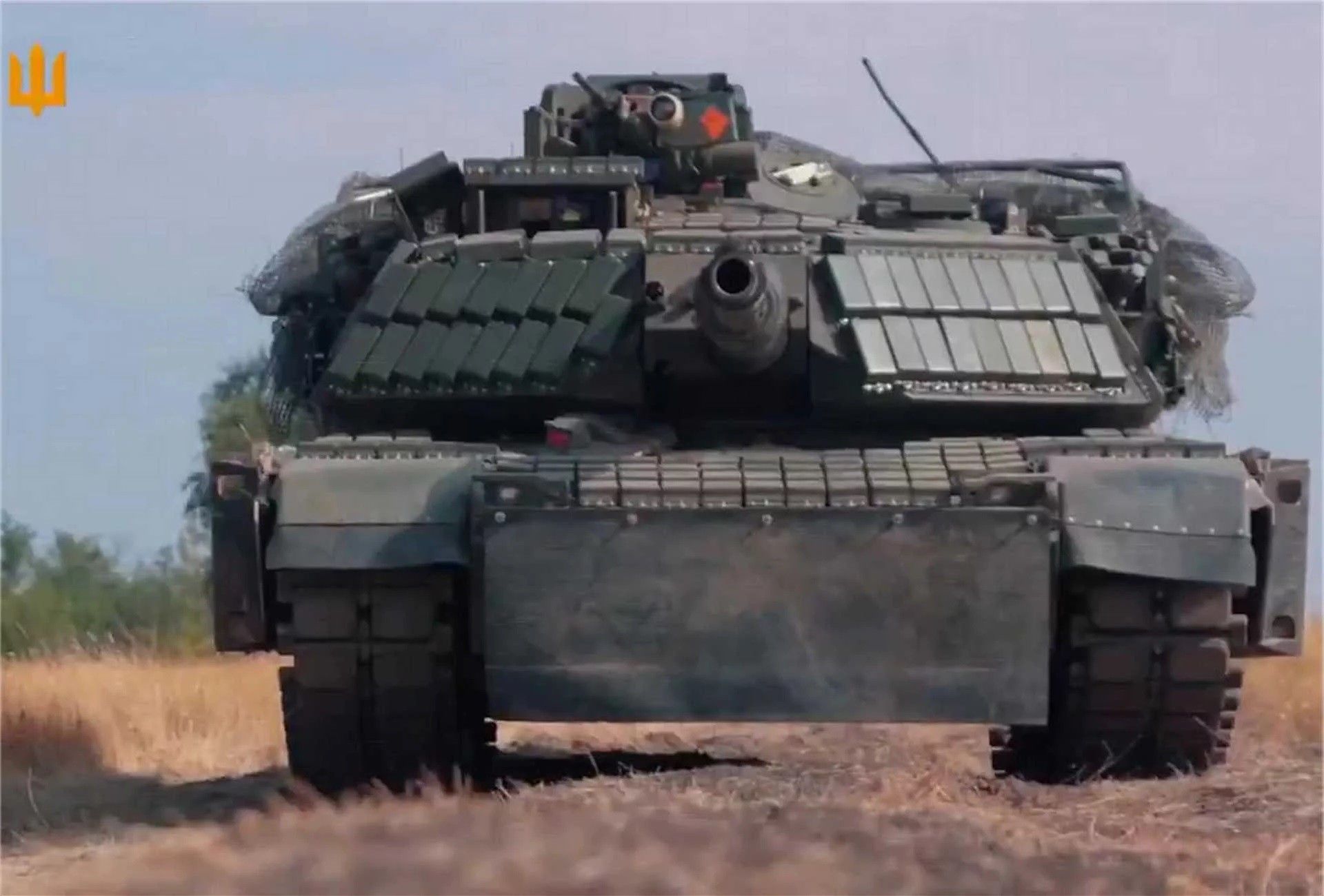
Ukraine has received a wide range of Western and modernised tanks, including Abrams, Leopard 1, Leopard 2, Challenger 2, PT-91 Twardy and M-55S1 vehicles. Loss data based on Russian visual materials show that many vehicles have been hit, damaged or destroyed, but several types still remain in significant numbers.
Western tanks generally provide better crew survivability, especially Abrams and Strv 122A vehicles. The main problems for Ukrainian armour are mines, FPV drones and the lack of active protection systems able to defend vulnerable parts of vehicles against shaped-charge attacks.
Author: Damian Ratka
V4 after the freeze. Ahead of the summit in Hungary
The Visegrad Group is unlikely to return as one united political voice of Central Europe, but it can still be useful as a practical format for cooperation. Czechia, Hungary, Slovakia and Poland may find common ground on cohesion policy, competitiveness, agriculture, energy, Ukraine-related coordination and EU budget issues.
The V4 can also support cooperation in defence industry, military mobility and infrastructure, especially when linked with the Three Seas Initiative, the Bucharest Nine and Baltic cooperation. For Poland, the format should be treated as one useful regional tool among several, not as the centre of its entire regional policy.
Author: Mateusz Gniazdowski

- ITALY
- JAPAN
- GCAP
- UNITED KINGDOM
- FCAS
- AIR DEFENCE
- EUROPE
- RUSSIA
- NATO
- DONALD TRUMP
- UKRAINE
- NATO SUMMIT
- TURKEY
- TÜRKIYE
- NATO EASTERN FLANK
- CHINA
- ALGERIA
- J-10C
- KJ-500
- FRANCE
- INDUSTRY
- DRONES
- BELARUS
- ALYAKSANDR LUKASHENKA
- LOGISTICS
- TRANSPORT
- HOMAR-K
- E5
- ELSA
- NUCLEAR WEAPONS
- VISEGRAD GROUP
- HUNGARY
- ABRAMS
- LEOPARD 1
- LEOPARD 2
- CHALLENGER 2
- PT-91 TWARDY


