- WIADOMOŚCI
East Front News #105: Russian missile hit Poland and Rosatom returning to Europe

East Front News is a weekly newsletter summarizing the past week’s most important events concerning security and the situation in the Central and Eastern Europe region. It includes original opinions and comments, along with key news items significant from a Polish perspective. If you would like to receive this newsletter, please sign up by clicking
Russia's attack. Poland's exemplary response
A Russian Kh-101 cruise missile entered Polish airspace during a major attack against Ukraine and struck an uninhabited area nearly one hundred kilometres from the Polish-Ukrainian border.
Poland raised the readiness of fighter aircraft, early-warning platforms, helicopters and ground-based air-defence systems. The incident showed that national and allied forces were prepared, although it also renewed the debate about strengthening regional air defence.
Author: Michał Górski

Russian missile hit Poland
A Russian Kh-101 cruise missile violated Polish airspace during an overnight attack against Ukraine. An F-16 was scrambled after an unidentified object appeared on Polish radar systems.
The object disappeared from radar before interception, but a Mi-24 helicopter later located the crash site near Tarnawa-Kolonia in the Lublin region. The military stated that the object could have been neutralised after positive identification.
Author: Patryk Jagnieża
See also 

Have Russian disinformation methods in the Nordic region changed?
Russian information operations in the Nordic countries continue to undermine public institutions, support for Ukraine and confidence in NATO. However, their methods and distribution channels are becoming more sophisticated.
Russian narratives are now spread through social media, false news platforms and content that may be reproduced by artificial-intelligence systems. These activities are increasingly connected with cyberattacks, intelligence operations and potential acts of sabotage.
Author: Mateusz Gibała

Spain invests €62m in French military satellites
Spain will invest €62 million to maintain access to France’s CSO military reconnaissance satellites until 2033. The cooperation provides Madrid with high-resolution optical and infrared imagery for intelligence and operational planning.
Spain is developing its own space capabilities, but they cannot yet replace the French system. The agreement also confirms France’s growing role as one of Europe’s principal providers of military satellite intelligence.
Author: Aleksander Olech

The end of an era in Congress: Republican hawks are leaving
The death of Senator Lindsey Graham marks the disappearance of one of the most prominent Republican supporters of Ukraine and the traditional American approach to international security.
His departure highlights the transformation of the Republican Party, where the MAGA movement is increasingly replacing politicians who supported American leadership, NATO and military assistance for Kyiv.
Author: Michał Górski

Evaluating Europe's loitering munition technology: the Sentinel Strike Challenge
The European Defence Agency has selected five companies for the final stage of the Sentinel Strike Challenge. More than 140 businesses initially expressed interest in the competition.
Systems developed by companies from Germany, the Netherlands, Slovenia, Portugal and Greece will be tested under realistic conditions in Portugal. The winning companies will receive prizes worth up to €1.8 million.
Author: Patryk Jagnieża

Merz's failed reset: Germany begins discussing a new chancellor
A poorly managed cabinet reshuffle has further weakened German Chancellor Friedrich Merz. The changes created additional political disorder instead of restoring confidence in his government.
With support for the AfD continuing to grow, parts of the Christian Democratic Union are reportedly considering whether North Rhine-Westphalia’s premier, Hendrik Wüst, could eventually replace Merz.
Author: Jakub Bielamowicz

The economic crisis in Russia is becoming more visible
The Russian central bank has reduced its 2026 GDP growth forecast to between zero and one per cent. Fuel shortages, inflation and weaker domestic demand are placing increasing pressure on the economy.
Western sanctions have not caused an economic collapse, but they have reduced export revenues and weakened Russia’s long-term growth prospects. Ukrainian attacks on refineries and fuel infrastructure are intensifying these difficulties.
Author: Amelia Wojciechowska

Russia mobilises 25,000 more troops
Russia is increasing the authorised strength of its armed forces by 25,000 servicemen. The additional personnel are formally connected with the creation of new military construction units.
The decision is considerably smaller than the mobilisation of several hundred thousand people discussed in previous months. It may reinforce Russian support structures, but it will not fundamentally change the military balance.
Author: Aleksander Olech
See also

Putin's old trick: inventing a Polish plan to partition Ukraine
Vladimir Putin has again suggested that Poland, Hungary and Romania may eventually seize parts of western Ukraine. The claim is part of a long-running Russian information operation rather than a genuine territorial scenario.
Moscow is attempting to create distrust between Ukraine and its closest regional partners. Russia presents neighbouring countries as potential aggressors while portraying its own invasion as an alleged defence of Ukrainian territorial integrity.
Author: Aleksander Olech

India: youth protests temporarily suspended, but will reforms follow?
Youth protests in India were triggered by leaked examination questions and wider frustration with corruption in the education system. The demonstrations have been suspended, but the underlying problems remain unresolved.
India lacks a sufficient number of high-quality universities and research institutions. Without extensive reforms, limited educational opportunities may continue to generate public anger among young Indians.
Author: Adam Burakowski

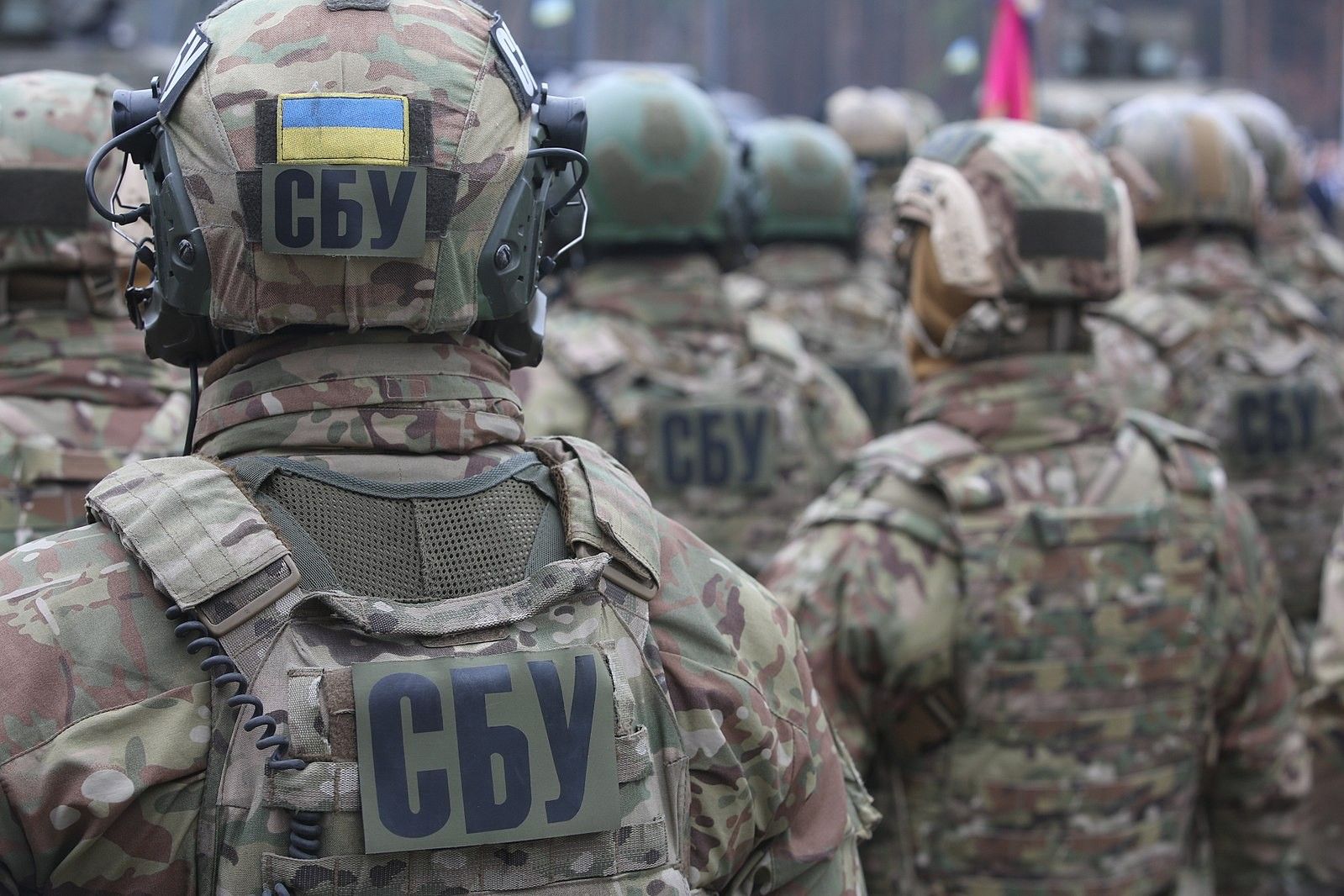
Will Ukrainian security services be free to operate in Poland?
A Polish-Ukrainian agreement on combating crime could allow Ukrainian officers to perform specified official duties and participate in agreed activities on Polish territory.
The agreement would not permit Ukrainian services to conduct independent operations or exercise Polish enforcement powers. Cooperation could include liaison officers, joint working groups, observers and the exchange of operational data.
Author: Adam Jawor
New Russian rocket artillery at the front?
A Ukrainian drone has attacked a Russian multiple rocket launcher in the Donetsk region that appears to resemble the new Sarma system. The recording may represent the first visual evidence of its operational deployment.
Sarma is a lighter 300 mm rocket launcher developed as a Russian response to the American HIMARS. Moscow previously announced the acquisition of twelve launchers and associated transloader vehicles.
Author: Adam Świerkowski

Wildfire response systems in Southern Europe
Southern Europe is facing another exceptionally severe wildfire season, with France, Spain and Greece struggling with simultaneous fires, mass evacuations and growing pressure on national emergency services.
The three countries use different response models, combining civilian services, military units, contracted aircraft and new technologies. However, the scale of the crisis demonstrates that no European country can manage prolonged, simultaneous wildfires without stronger EU-level support.
Author: Sylwia Kubica

Is Rosatom returning to Europe through the back door? Germany approves controversial nuclear project
Lower Saxony has approved the expansion of the Lingen nuclear fuel plant, allowing it to manufacture fuel assemblies using technology licensed from Russia’s Rosatom group.
Supporters argue that production in Germany will protect European operators of Soviet-designed reactors and gradually reduce direct imports from Russia. Critics warn that the project preserves technological dependence and creates potential espionage, sabotage and cybersecurity risks.
Author: Natalia Adrianna Potera
See also