












- WIADOMOŚCI
East Front News #104: Terrorism in Russia and Ukraine drone export

East Front News is a weekly newsletter summarizing the past week’s most important events concerning security and the situation in the Central and Eastern Europe region. It includes original opinions and comments, along with key news items significant from a Polish perspective. If you would like to receive this newsletter, please sign up by clicking
CAESAR becomes Southeast Asia's artillery choice
The French CAESAR 155 mm wheeled howitzer has become an important artillery platform in Southeast Asia. Indonesia, Thailand and Malaysia have selected the system as they modernise their long-range fire-support capabilities.
Its success reflects the region’s preference for mobility, lower operating costs and easier deployment compared with heavier tracked artillery. Local assembly, technology transfer and ammunition production are also becoming important elements of new contracts.
Author: Aleksander Olech

Ukraine will export drones to the US
Ukraine and the United States have signed a preliminary agreement enabling six Ukrainian companies to sell approximately 100 drones each to the American market. It is the first agreement of this kind between the two countries.
The deal marks Ukraine’s transition from a recipient of military assistance to an exporter of combat-tested technology. It could also lead to Ukrainian drone production being established in the United States.
Author: Patryk Jagnieża
See also 

Terrorism in Russia at national, regional and international level
Russia continues to face terrorist threats originating from the North Caucasus, Central Asia and organisations connected with ISIS and ISIS-K. The attack on Crocus City Hall demonstrated serious weaknesses in the Russian security system despite earlier warnings.
The Kremlin also uses counterterrorism as a political instrument to justify repression, military activity and foreign influence. By defining political opponents as terrorists, Moscow risks distorting its understanding of genuine threats and remaining vulnerable to further attacks.
Author: Aleksander Olech

Rise of the terrorist threat in Germany
Germany has increased its terrorist threat level following new intelligence and a growing number of warnings about possible attacks. Potential targets include critical infrastructure, institutions and individual public figures.
Berlin is preparing for conventional terrorist attacks as well as cyber and hybrid operations. The government also plans to expand the powers, staffing and financial resources of its intelligence services.
Author: Sebastian Wojciechowski

The end of CAATSA sanctions? Türkiye's path back to the F-35
The NATO summit in Ankara created new momentum in negotiations over Türkiye’s possible return to the F-35 programme. American officials have indicated that lifting CAATSA sanctions and restoring defence cooperation may be possible.
The main obstacle remains Türkiye’s purchase of Russian S-400 air-defence systems. Any agreement will require not only political support from Presidents Donald Trump and Recep Tayyip Erdoğan but also the approval of the United States Congress.
Author: Natalia Adrianna Potera

Europe exposes Russia's cyber war
The European Union, France and NATO have publicly condemned a broad Russian cyber campaign linked to the Federal Security Service. Its targets have included European institutions, critical infrastructure and organisations supporting Ukraine.
Russia’s cyber operations involve intelligence agencies, military units, criminal groups, proxy hackers and private companies. Europe therefore needs stronger attribution mechanisms, intelligence cooperation and coordinated protection of critical infrastructure.
Author: Aleksander Olech
See also

Europol and the new terrorism algorithm
Europol recorded 45 terrorist attacks across the European Union in 2025, including 24 linked to jihadist terrorism. A total of 486 people were arrested, more than 100 of whom were aged 18 or younger.
The article argues that Europol’s existing analytical model does not fully address state-sponsored terrorism, cooperation between intelligence services and criminal groups, or the use of artificial intelligence and biological agents by extremist organisations.
Author: Sebastian Wojciechowski

Friction between India and Russia: everything under control
Four Indian sailors were killed when Russian forces attacked a commercial vessel in the Black Sea. India responded by summoning the Russian chargé d’affaires and expressing serious concern about the safety of civilian shipping.
The incident is unlikely to fundamentally damage relations between New Delhi and Moscow. Russian oil and defence cooperation remain important to India, which continues to maintain close relations with Russia, the United States and the European Union.
Author: Adam Burakowski

First peace, then denuclearisation
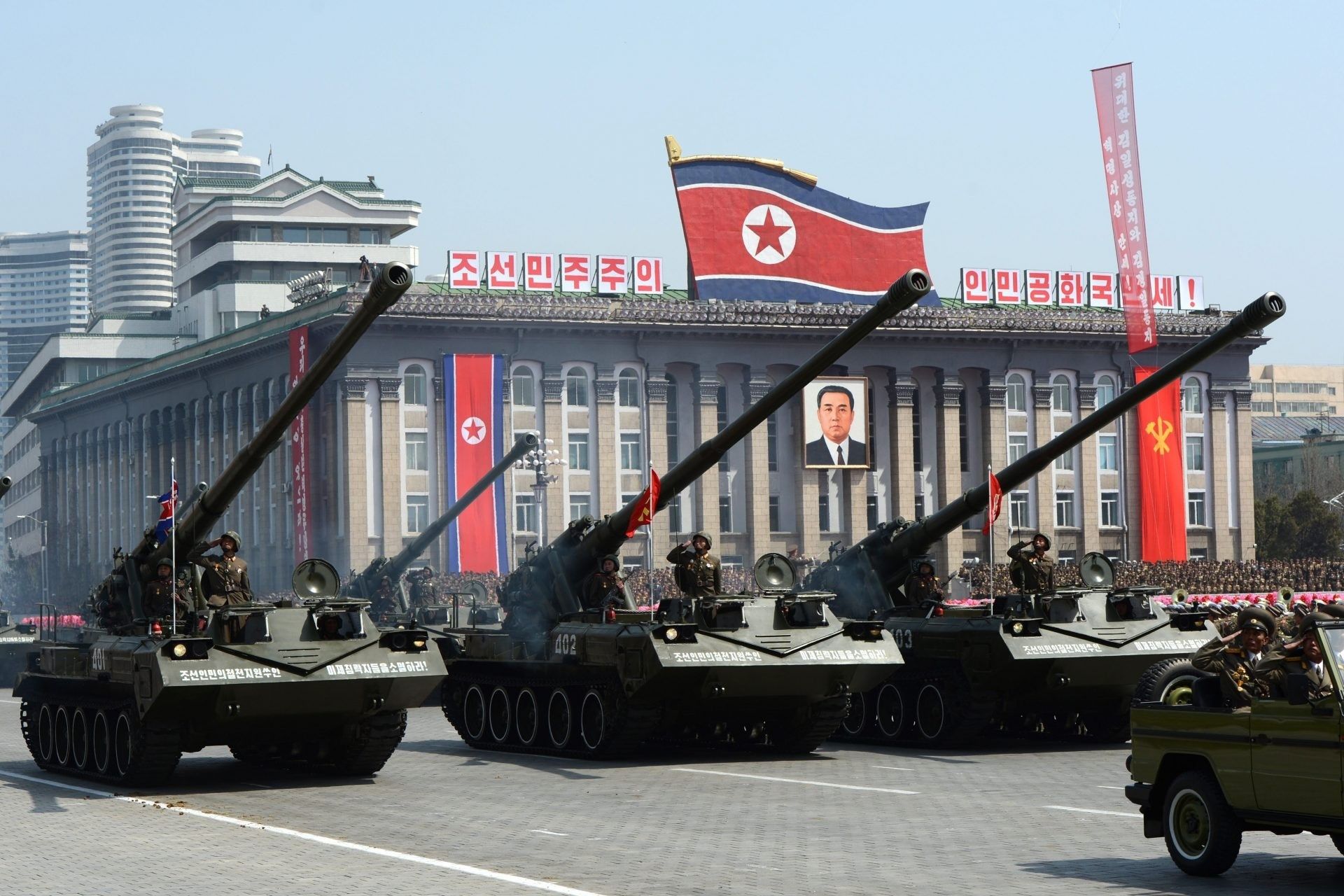
South Korea is changing its approach towards North Korea by prioritising peace talks rather than demanding immediate denuclearisation. Seoul hopes that a less confrontational policy will help restart dialogue with Pyongyang.
The South Korean government has suggested that North Korea could receive tangible benefits in return for halting the expansion of its nuclear arsenal. Future negotiations may also depend on dialogue between the United States and China.
Author: Patryk Jagnieża
See also
Promised Skyranger systems remain undelivered in 2026
Rheinmetall has not yet delivered the promised Skyranger 35 air-defence systems mounted on Leopard 1 chassis to Ukraine. Earlier statements suggested that the first vehicles could be transferred before the end of 2025.
The systems would strengthen Ukraine’s ability to counter Russian drones and other low-altitude threats. Ten vehicles were originally expected to be provided, but the delivery schedule remains unclear.
Author: Adam Świerkowski

PGZ unveils plans for MSPO 2026
The Polish Armaments Group will present a heavy infantry fighting vehicle prototype, the OSA and SAN programmes, missile technologies and projects developed with international partners during MSPO 2026.
The exhibition will take place in a new hall at Targi Kielce. PGZ has also renewed its strategic partnership with the organiser, continuing cooperation that has developed over several decades.

Denmark to increase defence spending earlier than originally planned
Denmark plans to increase core defence expenditure to 3.5 per cent of GDP by 2030, reaching NATO’s target five years earlier than previously expected. Copenhagen argues that the deteriorating security environment requires faster investment.
Between 2026 and 2033, the country intends to allocate an additional DKK 260 billion to defence. Funding for military support to Ukraine will also increase.
Author: Michał Górski

Geostrategic determinants of the security of Poland and Ukraine
Russia’s annexation of Crimea, the invasion of Ukraine and the militarisation of the Kaliningrad region have fundamentally changed the security environment in Central and Eastern Europe. Poland and Ukraine occupy a particularly important position in this confrontation.
The region is also facing disinformation, cyberattacks, economic pressure and border incidents. Effective deterrence therefore requires stronger military capabilities, regional cooperation and continued integration with NATO and the European Union.
Author: Agnieszka Rogozińska

The double standards on the use of mercenaries in African conflicts
Russian mercenaries operating in Mali and the Central African Republic have attracted extensive international criticism. However, Colombian fighters allegedly recruited through companies connected with the United Arab Emirates to support Sudan’s Rapid Support Forces have received less attention.
The article argues that the response of Western countries is influenced by their political relationships with the states sponsoring mercenary activity. Selective accountability may allow external actors to prolong African conflicts without facing serious consequences.
Author: Agaba Tabitha

Lithuania with the new German missiles
Lithuania has received German-supplied Spike LR2 anti-tank guided missiles worth more than €3 million. The weapons will be used with the country’s Vilkas infantry fighting vehicles.
The Spike LR2 has a range of up to 5.5 kilometres and can engage armoured vehicles, buildings and fortified positions. Lithuania plans further deliveries as it expands its ammunition reserves and strengthens deterrence against Russia.
Author: Michał Zagroba

- S-400
- MSPO
- RECEP TAYYIP ERDOGAN
- SOUTH KOREA
- DONALD TRUMP
- NATO
- F-35
- RHEINMETALL
- CAESAR
- EUROPOL
- PGZ
- OSA
- SAN
- LITHUANIA
- RUSSIA
- POLAND
- CYBER SECURITY
- GERMANY
- DRONES
- TURKEY
- DENMARK
- POLISH ARMAMENTS GROUP
- UKRAINE
- FRANCE
- UNITED STATES
- INDIA
- TERRORISM
- INDONESIA
- ASIA
- THAILAND
- NORTH KOREA
- AFRICA
- TÜRKIYE
- NUCLEAR THREAT
- MALAYSIA
- ANKARA 2026


