












- WIADOMOŚCI
East Front News #95: Trump sends more troops to Poland and Chinese spies in Germany

East Front News is a weekly newsletter summarizing the past week’s most important events concerning security and the situation in the Central and Eastern Europe region. It includes original opinions and comments, along with key news items significant from a Polish perspective. If you would like to receive this newsletter, please sign up by clicking
Poland deploys fighter jets to Estonia
Poland will deploy fighter jets to Estonia’s Ämari Air Base as part of NATO’s Baltic Air Policing mission. The deployment strengthens NATO’s eastern flank and highlights Poland’s growing role as a regional security provider in response to the continuing Russian threat.
The mission is designed to protect Baltic airspace, as Estonia, Latvia and Lithuania do not possess their own fighter aviation capabilities. Warsaw also stressed that security across the eastern flank must be treated as one connected strategic area, stretching from Poland to Finland and Sweden.
Author: Aleksander Olech

How Taiwan plans to deter China
Taiwan’s Deputy Foreign Minister Dr François Chihchung Wu warned that China’s military activity and grey-zone tactics pose a serious threat to stability in the Indo-Pacific region. He stressed that any escalation around Taiwan would disrupt global trade and semiconductor supply chains.
Taiwan is expanding cooperation with Europe in areas such as cybersecurity, drone technology, critical infrastructure protection and defence resilience. Taipei also sees Poland as an important partner due to its growing defence investments and shared democratic values.
Author: Aleksander Olech

Partner or rival? Europe's internal division over Türkiye's role
A dispute over comments made by Ursula von der Leyen exposed deep divisions within the European Union regarding Türkiye’s role in European security. Some EU states view Ankara as a difficult political partner, while others consider cooperation with Türkiye strategically essential.
The article argues that Europe increasingly depends on Türkiye’s military capabilities, defence industry and geopolitical position, particularly in the context of the war in Ukraine and uncertainty surrounding future US involvement in Europe.
Author: Natalia Potera

Trump sends more troops to Poland
President Donald Trump has announced that the United States will send additional 5000 troops to Poland. It’s a sudden change in tone regarding the recent discussions about American military presence on NATO’s eastern flank. Just a few days before it has been announced that Washington would delay a planned rotation of U.S. forces to Poland.
American soldiers remain one of the strongest deterrence signals to Russia. However recent events raised uncertainty and questions whether U.S. can be treated as a reliable partner. What should happen now is even further strengthening of European and regional cooperation.
Author: Aleksander Olech
See also 

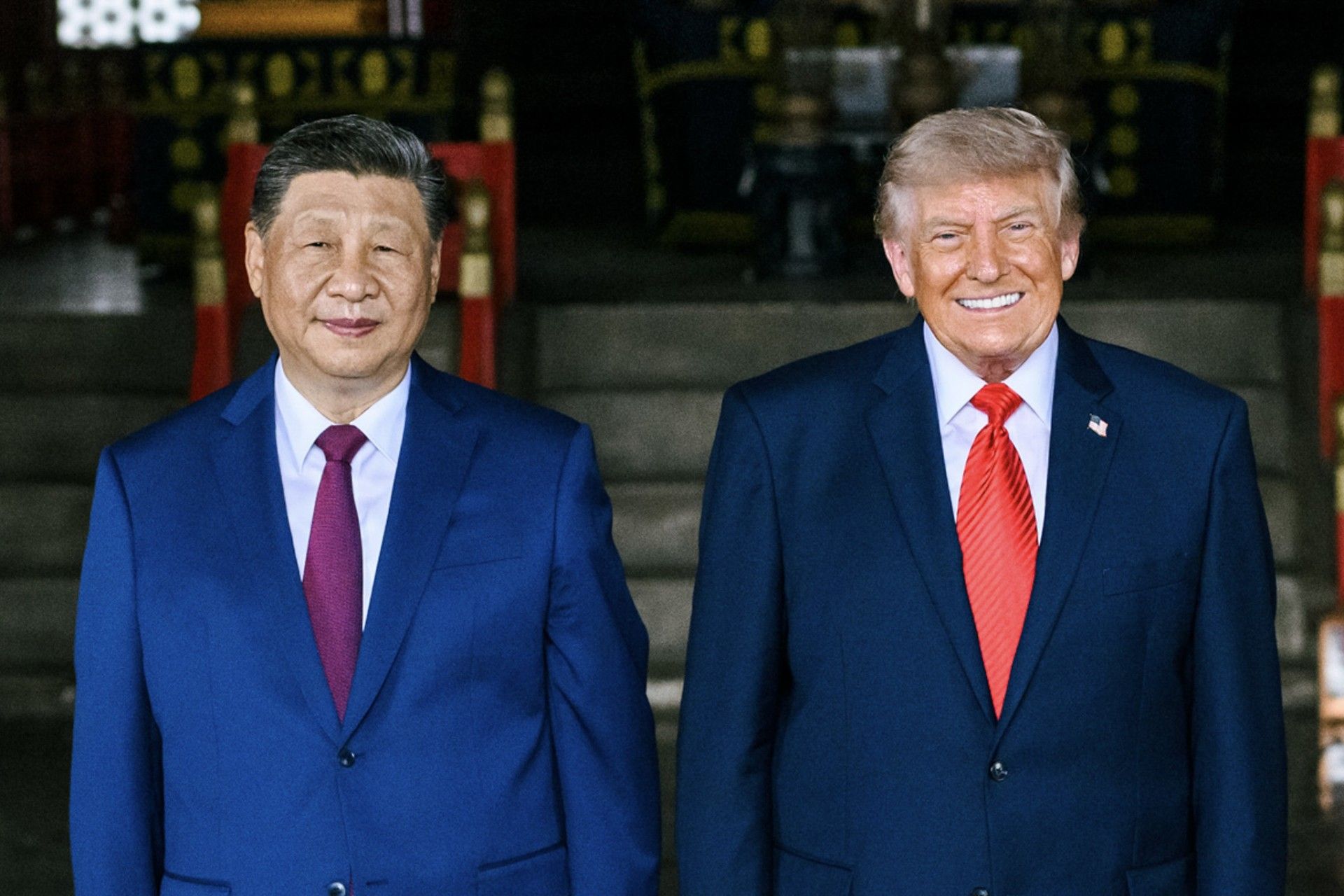
Trump vs. Iran: "China will not be a lifeline"
Donald Trump’s visit to China failed to produce any breakthrough regarding Iran, despite expectations that Beijing could pressure Tehran into concessions. China opposed anti-Iran initiatives at the United Nations and continued to prioritise its own strategic interests.
The article argues that Iran sees cooperation with China mainly as a tool for strengthening its geopolitical position rather than submitting to American demands. The war in the Middle East has also increased Iran’s strategic importance for Beijing.
Author: Witold Repetowicz
The evolving role of the arms industry in defence
The global arms industry is expanding rapidly due to rising defence spending, international conflicts and growing fears of future wars. Countries are increasing weapons stockpiles both for deterrence and to strengthen their geopolitical influence.
The article highlights that arms exports are increasingly used as a foreign policy tool by major powers such as the United States, France and Russia. According to SIPRI data, global demand for weapons rose significantly between 2021 and 2025.
Author: Agaba Tabitha

Stryker for the Polish Armed Forces? Gen. Sokołowski on an armored leap
Lieutenant General Marek Sokołowski discussed the rapid modernisation of the Polish Armed Forces, including the introduction of Abrams and K2 tanks, Borsuk infantry fighting vehicles and advanced artillery systems. He stressed that integrating new equipment requires extensive training, logistics and infrastructure development.
The general stated that soldiers view the new platforms positively, particularly compared with older Soviet-era systems. Poland is also working closely with South Korean and American partners to improve operational readiness and long-term defence capabilities.
Author: Jędrzej Graf

Chinese spies in Germany
German authorities arrested a married couple suspected of spying for China and gathering information on technologies with potential military applications. The pair allegedly established contacts with academics specialising in aerospace engineering, artificial intelligence and computer science.
According to prosecutors, the suspects persuaded several scientists to travel to China and deliver lectures attended by representatives of Chinese state-owned defence companies. Beijing denied all allegations of espionage.
Author: Patryk Jagnieża
See also
A war Poland cannot afford: Russian aggression could cost over €1 trillion
A new report warns that a large-scale war with Russia could cost Poland more than €1 trillion and set the country back economically for decades. Analysts examined several scenarios ranging from missile strikes to a full-scale invasion and occupation of Polish territory.
The study highlights not only economic destruction, but also long-term social trauma, infrastructure collapse and demographic decline. The report argues that strong deterrence and continued military modernisation are essential for Poland’s security.
Author: Kacper Kremiec

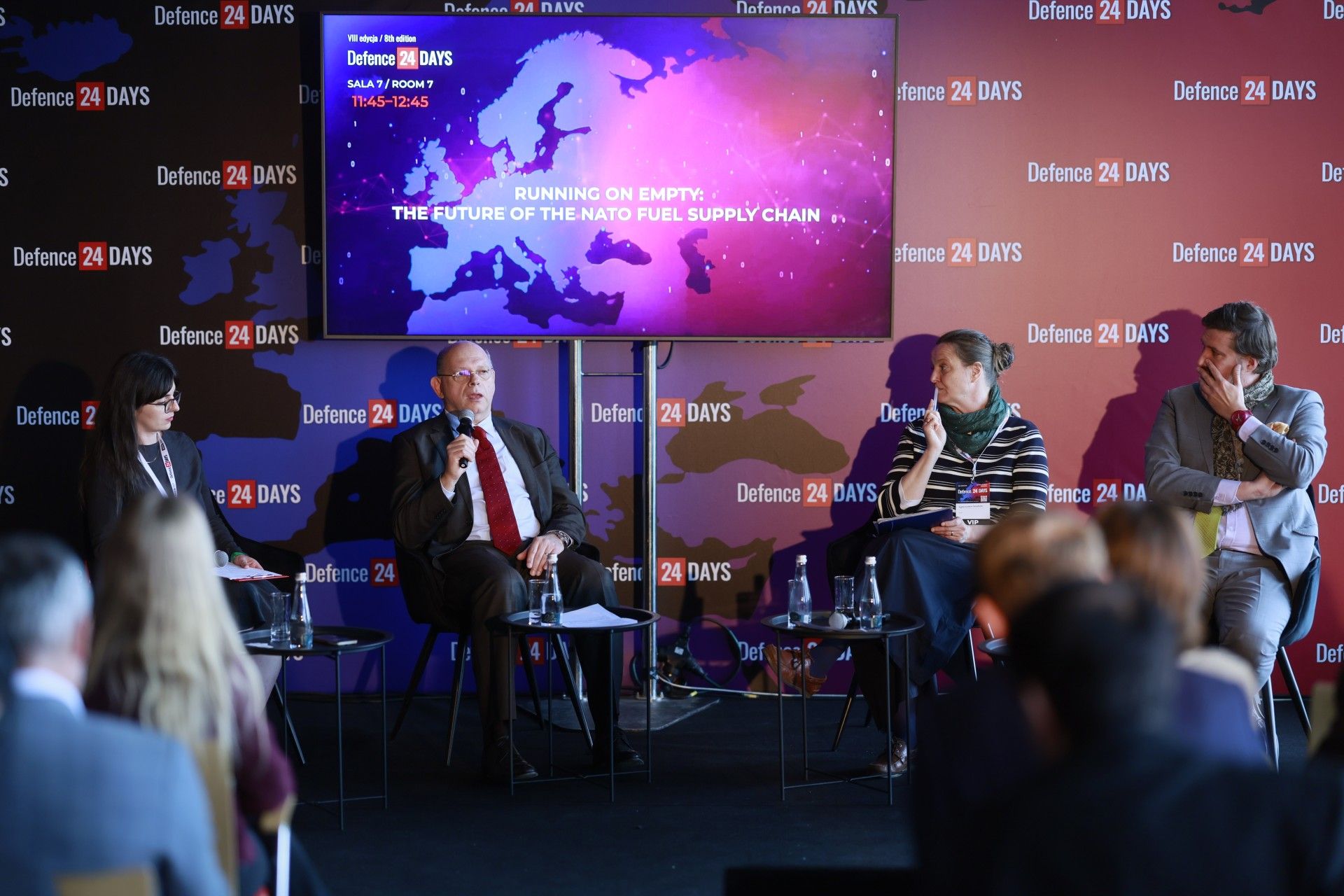
Poland in the NATO pipeline system within 6 years? It's possible (and political)
Poland plans to join NATO’s Eastern European Pipeline System within six years in order to improve fuel supply security for the alliance’s eastern flank. The project would connect infrastructure across Central and Eastern Europe and strengthen NATO logistics during potential conflicts.
Experts argue that pipelines are far more resilient and efficient than fuel transport by road, especially during wartime. The initiative also reflects growing Polish-German cooperation following Russia’s invasion of Ukraine.
Author: Katarzyna Łukasiewicz
- ABRAMS
- SIPRI
- ESTONIA
- STRYKER
- DONALD TRUMP
- NATO
- IRAN
- TRUMP
- LITHUANIA
- RUSSIA
- POLAND
- TAIWAN
- EUROPEAN UNION
- GERMANY
- TURKEY
- INDUSTRY
- FRANCE
- CHINA
- LATVIA
- UNITED STATES
- EUROPE
- NATO EASTERN FLANK
- K2 TANK
- EASTERN FLANK
- ESPIONAGE
- TÜRKIYE
- FIGHTER JETS
- EAST FRONT NEWS
- EASTERN EUROPE
- US TROOPS PRESENCE
- ARMS INDUSTRY
- CENTRAL EUROPE


